Multiple Sclerosis: Can a Root-Cause Approach Support MS Care?
Quick answer: Multiple sclerosis is an immune-mediated disease in which the immune system attacks the protective myelin around nerves, causing fatigue, numbness, and vision and balance problems. At Deeper Healing in Charleston, SC, we complement your neurology care by addressing environmental root-cause factors — toxins, low vitamin D, and chronic infection — that may influence the immune process.
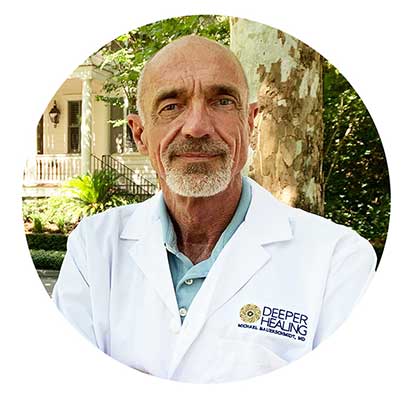
Reviewed & updated August 2026 by Michael Bauerschmidt, MD
Key takeaways
- Multiple sclerosis (MS) is an immune-mediated disease of the central nervous system in which myelin, the protective coating around nerves, is damaged.
- Deeper Healing complements — and does not replace — the care of your neurologist and standard MS treatment.
- Research shows a strong, well-established association between Epstein-Barr virus (EBV) and the later development of MS.
- Environmental factors studied in MS include vitamin D status, smoking, and toxic exposures.
- A root-cause, environmental medicine approach aims to support your overall health alongside your neurology team, never to promise a cure or reversal.
What is multiple sclerosis?
Multiple sclerosis is a chronic, immune-mediated disease of the central nervous system in which the immune system attacks myelin — the protective sheath surrounding nerve fibers in the brain and spinal cord. This demyelination disrupts the electrical signals traveling along the nerves, producing symptoms that range from fatigue and numbness to vision and balance problems. According to the National Institute of Neurological Disorders and Stroke (NINDS), MS is one of the most common neurological causes of disability in young adults and most often appears between the ages of 20 and 40, affecting women more frequently than men.
What are the symptoms of multiple sclerosis?
Because MS can affect any part of the central nervous system, symptoms vary widely from person to person and often come and go:
- Fatigue — one of the most common and disabling symptoms
- Numbness or tingling in the face, body, arms, or legs
- Vision problems, such as blurred or double vision
- Muscle weakness
- Balance and coordination difficulties
- Cognitive changes, including problems with memory and concentration
What causes multiple sclerosis — the environmental root-cause view
The core disease process in MS is immune-mediated demyelination: the immune system attacks and strips away the myelin protecting nerve fibers. Why this happens is not fully understood, but research points to a combination of genetic susceptibility and environmental triggers. There is now a well-established association between the Epstein-Barr virus (EBV) and the later development of MS, and the National Institute of Environmental Health Sciences links environmental exposures to the development of autoimmune and immune-mediated disease more broadly. Environmental factors studied in MS include low vitamin D, smoking, and toxic exposures. From a root-cause perspective, these are the kinds of contributors we help address — always alongside, and never in place of, your neurology care.
How Deeper Healing supports multiple sclerosis
Deeper Healing does not treat or cure multiple sclerosis, and we do not replace your neurologist. Instead, we work to complement your standard MS care by supporting your overall health and addressing modifiable environmental factors. Building on detailed intake and comprehensive lab analysis, Dr. Bauerschmidt and our team look at toxic exposures, vitamin D status, chronic infection, and other root-cause contributors, then support the body using environmental medicine and light and oxygen therapies. The goal is to support your resilience and quality of life while you remain under the care of your neurology team.
Conventional care vs a root-cause / complementary approach
| Conventional MS care (your neurologist) | Deeper Healing complementary approach |
|---|---|
| Diagnoses MS and prescribes disease-modifying therapies | Works alongside your neurologist; never replaces MS medication |
| Manages relapses and monitors disease activity with MRI | Assesses environmental contributors — toxins, vitamin D, infection |
| Focuses on the neurological disease process | Supports overall health, resilience, and quality of life |
| Rarely evaluates toxic burden or environmental exposures | Tests for heavy metals, mold, chronic infection, and nutrient status |
Key terms explained
- Myelin
- The protective, insulating sheath that surrounds nerve fibers and allows electrical signals to travel quickly and efficiently through the nervous system.
- Demyelination
- The damage to or loss of myelin that occurs in MS, which slows or disrupts nerve signals and produces neurological symptoms.
- Relapsing-remitting MS
- The most common form of MS, marked by periods of new or worsening symptoms (relapses) followed by partial or full recovery (remission).
- Epstein-Barr virus (EBV)
- A common herpes-family virus with a well-established association with the later development of MS, making it a key focus of root-cause investigation.
Patient experience
Many patients come to us wanting to do everything they can to support their health alongside their neurology care. Read how a root-cause, holistic detox approach has helped people dealing with complex chronic conditions such as Lyme, Parkinson’s, and EBV: How holistic detox methods transform Lyme, Parkinson’s, and EBV treatment →
Frequently asked questions
Does Deeper Healing replace my neurologist?
No. Deeper Healing complements standard MS care — it does not replace it. Your neurologist diagnoses and manages your multiple sclerosis, including disease-modifying therapy. We work alongside that care to address environmental root-cause factors and support your overall health. We never advise stopping or changing your MS medication without your neurologist.
What causes multiple sclerosis?
The exact cause is unknown, but MS is understood as an immune-mediated disease in which genetic susceptibility combines with environmental triggers. Research highlights a well-established association with Epstein-Barr virus, along with factors such as low vitamin D, smoking, and toxic exposures. The underlying process is an immune attack on myelin, the protective coating around nerves.
Is MS an autoimmune disease?
MS is described as an immune-mediated disease of the central nervous system, and it is widely considered autoimmune because the immune system attacks the body’s own myelin. According to NINDS, this immune-driven demyelination disrupts nerve signaling, producing the neurological symptoms characteristic of MS.
Is there a link between EBV and MS?
Yes. There is now a strong, well-established association between prior Epstein-Barr virus infection and the later development of multiple sclerosis. While EBV alone does not cause MS in everyone, it is considered an important contributing factor, which is why chronic infection is part of our root-cause investigation.
Can environmental toxins affect MS?
Environmental exposures are among the factors studied in relation to immune-mediated disease, and the NIEHS links environmental exposures to autoimmune conditions. Reducing your overall “body burden” of toxins is one modifiable factor we help assess and address as part of supporting your health — alongside, not instead of, your neurology care.
Can vitamin D and lifestyle factors influence MS?
Vitamin D status, smoking, and other lifestyle factors are among the environmental influences studied in MS. Optimizing modifiable factors such as vitamin D and reducing toxic exposures are supportive steps that fit within a complementary, root-cause approach while you continue standard MS care with your neurologist.
Where can I find an integrative MS doctor near me?
Deeper Healing Medical Wellness Center is located at 234 Seven Farms Drive, Suite 110, Charleston, SC 29492, on Daniel Island. We see patients from across the country who come to us for complementary, root-cause support to work alongside their neurology care.
Your next step: find out what may be adding to your load
Because environmental toxins are one of the modifiable factors studied in immune-mediated disease, a useful first step is understanding your own “body burden.” Our free two-minute assessment helps you gauge whether accumulated toxins could be adding to your overall load — information you can bring to your care team as you support your health alongside your MS treatment.
Take the Toxin Quiz
Two minutes, free, and completely confidential — see whether your body burden of toxins could be adding to your symptoms.
Sources
- National Institute of Neurological Disorders and Stroke (NINDS) — Multiple Sclerosis
- National Institute of Environmental Health Sciences — Autoimmune Diseases
Medically reviewed by Michael Bauerschmidt, MD — Founder and Medical Director, Deeper Healing Medical Wellness Center. Board-certified physician specializing in functional and environmental medicine.
Last reviewed: August 2026.
Deeper Healing Medical Wellness Center · 234 Seven Farms Drive, Suite 110, Charleston, SC 29492 · (843) 253-7302
This page is for educational purposes and is not a substitute for professional medical advice, diagnosis, or treatment. Multiple sclerosis requires ongoing care from a qualified neurologist; Deeper Healing complements but does not replace that care. Always consult a qualified healthcare provider about your individual condition.