Autoimmune Disease: Can You Treat the Root Cause, Not Just the Diagnosis?
Quick answer: Autoimmune disease is a condition in which the immune system mistakenly attacks the body’s own tissues, causing fatigue, inflammation, and recurring flares. At Deeper Healing in Charleston, SC, we look beyond the diagnosis to the root triggers — environmental toxins, chronic infections, and gut dysfunction — that provoke the immune attack, and address them in the right order.
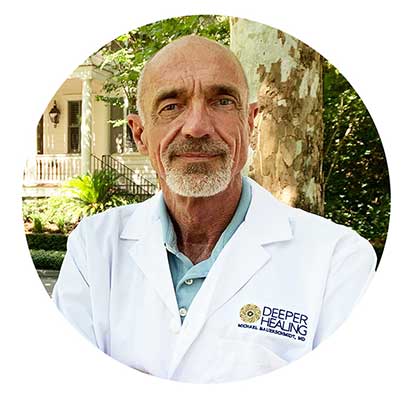
Reviewed & updated August 2026 by Michael Bauerschmidt, MD
Key takeaways
- There are more than 80 recognized autoimmune diseases, and together they affect an estimated 23.5 to 50 million Americans, according to the National Institutes of Health.
- A single diagnosis often misses the bigger picture — autoimmune conditions frequently share the same underlying immune drivers.
- Common root triggers include environmental toxins, chronic infections, and gut and immune dysfunction.
- Standard treatment usually suppresses the immune system or manages symptoms, but does not address why the immune system began attacking the body.
- A root-cause, functional and environmental medicine approach aims to calm the immune system rather than simply escalate medication.
What is autoimmune disease?
Autoimmune disease is a category of conditions in which the immune system, which normally defends against infection, mistakenly identifies the body’s own tissues as a threat and attacks them. Depending on which tissues are targeted, this can affect the thyroid, joints, nerves, gut, skin, or connective tissue, producing a wide range of symptoms. There are more than 80 recognized autoimmune diseases, affecting an estimated 23.5 to 50 million Americans, according to the National Institute of Allergy and Infectious Diseases — and they are far more common in women than men.
Common autoimmune conditions and symptoms
Autoimmune diseases can affect nearly any organ system. Some of the most common include:
- Hashimoto’s thyroiditis — the immune system attacks the thyroid, causing fatigue, weight gain, and brain fog.
- Rheumatoid arthritis — the immune system attacks the joints, causing pain, stiffness, and swelling.
- Multiple sclerosis — the immune system attacks the protective covering of nerves, causing numbness, weakness, and fatigue.
- Lupus — a systemic condition affecting skin, joints, kidneys, and other organs.
- Type 1 diabetes, celiac disease, psoriasis, and inflammatory bowel disease.
Although each condition has its own name, they often share overlapping symptoms — persistent fatigue, widespread inflammation, joint or muscle pain, brain fog, and unpredictable flares.
What causes autoimmune disease — and why standard treatment focuses only on symptoms
Conventional care usually names the specific autoimmune disease and prescribes medication to suppress the immune response or replace what the damaged organ can no longer produce. That can ease symptoms, but it does not answer the deeper question: why did the immune system begin attacking the body in the first place? In our experience, the immune trigger is frequently a combination of environmental toxins (including heavy metals and mold), chronic viral or bacterial infections, and gut and immune dysregulation. The National Institute of Environmental Health Sciences links environmental exposures to the development of autoimmune disease. When those drivers go unaddressed, patients often need stronger medication over time while never feeling truly well.
How Deeper Healing treats autoimmune disease
Deeper Healing takes a root-cause approach built on detailed intake and comprehensive lab analysis — not just confirming a diagnosis and prescribing suppression. Dr. Bauerschmidt and our team look for the specific toxins, infections, and imbalances driving the autoimmune attack, then treat them in a deliberate order using environmental medicine, light and oxygen therapies, and targeted detoxification and immune support. The goal is to reduce the immune system’s assault on the body’s own tissues and help patients regain energy and quality of life.
Conventional care vs a root-cause approach
| Conventional autoimmune care | Deeper Healing root-cause approach |
|---|---|
| Focuses on the single named diagnosis | Looks at the shared immune drivers across conditions |
| Suppresses the immune system or replaces lost function | Identifies and treats the triggers of the immune attack |
| Manages symptoms; medication often escalates over time | Aims to calm autoimmunity and reduce reliance on medication |
| Rarely tests for toxins or infections | Tests for heavy metals, mold, chronic infections, and gut health |
Key terms explained
- Autoantibody
- An antibody produced by the immune system that mistakenly targets the body’s own tissues. Autoantibodies are a hallmark of autoimmune disease and are often measured to confirm a diagnosis.
- Molecular mimicry
- A process in which a microbe or toxin resembles the body’s own tissue closely enough that the immune response against it also attacks healthy tissue — one proposed link between infections and autoimmunity.
- Leaky gut (intestinal permeability)
- A weakening of the gut lining that allows partially digested food and microbial products into the bloodstream, which can drive chronic immune activation and contribute to autoimmunity.
- Mycotoxins
- Toxic compounds produced by mold that can act as immune stressors and contribute to autoimmunity.
Patient experience
Many patients arrive after being told their labs are “normal” despite feeling exhausted and unwell. Read how a root-cause approach uncovers what standard testing misses: Extreme fatigue, autoimmune disease, and “normal” labs → You can also learn more about our work as a chronic disease, infection, and autoimmune specialist.
Frequently asked questions
Can autoimmune disease be reversed or put into remission?
Autoimmune disease cannot always be “cured,” but many patients can significantly reduce symptoms and autoantibody activity when the underlying triggers are identified and treated. By calming the immune drivers — toxins, infections, and gut dysfunction — the goal is to move toward remission and reduce reliance on escalating medication rather than simply managing symptoms.
What triggers autoimmune disease?
There is rarely a single cause. Autoimmune disease typically develops when a genetically susceptible person accumulates immune stressors over time — environmental toxins such as heavy metals and mold, chronic infections, gut barrier dysfunction, and nutrient depletion. Our work focuses on finding which of these drivers apply to you.
Can environmental toxins cause autoimmunity?
Yes. The National Institute of Environmental Health Sciences links environmental exposures — including heavy metals, mold and mycotoxins, and certain chemicals — to the development of autoimmune disease. Identifying and reducing this “body burden” is central to how we approach autoimmunity.
Why does conventional treatment only manage symptoms?
Standard care is generally organized around the named diagnosis, using medication to suppress the immune response or replace lost function. That can relieve symptoms, but it does not address why the immune system began attacking the body. When the root triggers are left in place, symptoms often return or require stronger medication over time.
Are autoimmune diseases connected to each other?
Often, yes. People with one autoimmune disease are more likely to develop another, and different conditions frequently share the same underlying immune drivers. This is why we look beyond a single diagnosis to the toxins, infections, and gut and immune dysfunction that can fuel autoimmunity throughout the body.
What tests help diagnose autoimmune disease?
Autoimmune disease is typically identified using autoantibody testing and inflammatory markers alongside a review of symptoms. We pair standard testing with evaluation for the toxins, chronic infections, and nutrient and gut imbalances that drive the autoimmune process, so treatment can target the actual cause rather than the label.
Where can I find an autoimmune specialist near me?
Deeper Healing Medical Wellness Center is located at 234 Seven Farms Drive, Suite 110, Charleston, SC 29492, on Daniel Island. We see patients from across the country who travel to us for root-cause autoimmune care after standard treatment has fallen short.
Your next step: find out what’s driving it
Because hidden environmental toxins so often sit at the root of autoimmune disease, the most useful first step is understanding your own “body burden.” Our free two-minute assessment helps you gauge whether accumulated toxins could be fueling your immune symptoms — and what to do next.
Take the Toxin Quiz
Two minutes, free, and completely confidential — see whether your body burden of toxins could be driving your symptoms.
Sources
- National Institute of Allergy and Infectious Diseases (NIH) — Autoimmune Diseases
- National Institute of Environmental Health Sciences — Autoimmune Diseases
Medically reviewed by Michael Bauerschmidt, MD — Founder and Medical Director, Deeper Healing Medical Wellness Center. Board-certified physician specializing in functional and environmental medicine.
Last reviewed: August 2026.
Deeper Healing Medical Wellness Center · 234 Seven Farms Drive, Suite 110, Charleston, SC 29492 · (843) 253-7302
This page is for educational purposes and is not a substitute for professional medical advice, diagnosis, or treatment. Always consult a qualified healthcare provider about your individual condition.