Insomnia: Can the Root Cause Be Treated?
Quick answer: Insomnia is a sleep disorder marked by trouble falling asleep, staying asleep, or getting restful sleep despite adequate opportunity, leaving you tired and foggy by day. At Deeper Healing in Charleston, SC, we look beyond sleeping pills to the root drivers — nervous-system overdrive, cortisol and HPA-axis imbalance, toxins, blood-sugar swings, and light and EMF exposure — and address them in the right order.
Updated: August 25, 2026 · Reviewed by Michael Bauerschmidt, MD
Key takeaways
- Insomnia is one of the most common sleep disorders. According to the CDC, only 69.5% of U.S. adults get sufficient sleep, and in 2020 about 14.5% of adults reported trouble falling asleep most days or every day.
- A sleeping pill can force sleep for a night but does not address why the nervous system will not settle.
- Common root drivers include a stuck “fight-or-flight” nervous system, cortisol and HPA-axis dysregulation, toxin exposure, blood-sugar swings, and poor light and EMF hygiene.
- Chronic insomnia is linked to daytime fatigue, mood changes, and difficulty concentrating, and is associated with longer-term health risks.
- A root-cause, functional and environmental medicine approach aims to restore the body’s natural ability to sleep rather than sedate it indefinitely.
What is insomnia?
Insomnia is a sleep disorder in which you regularly have difficulty falling asleep, staying asleep, or returning to sleep after waking too early — and its root cause often runs deeper than sleep habits alone, even when you have the time and a suitable environment to sleep. When these problems persist and begin to affect daytime energy, mood, and focus, clinicians describe it as chronic insomnia. According to the National Heart, Lung, and Blood Institute, insomnia is a common condition that can occur on its own or together with other physical and mental health conditions. Data from the CDC’s National Center for Health Statistics show that just 69.5% of adults get sufficient sleep — so roughly 3 in 10 do not.
What are the symptoms of insomnia?
Because sleep affects the whole body, the effects of insomnia reach well beyond the bedroom and often build over time:
- Difficulty falling asleep at bedtime
- Waking frequently during the night
- Waking too early and being unable to fall back asleep
- Feeling unrefreshed after a full night in bed
- Daytime fatigue and low energy
- Brain fog, poor concentration, and memory lapses
- Irritability, anxiety, or low mood
- A racing mind or feeling “wired but tired” at night
- Reliance on sleep aids to fall asleep
What causes insomnia — and why standard treatment often misses it
Conventional care often treats insomnia with sleep hygiene advice and a prescription or over-the-counter sleep aid. Those can help in the short term, but they rarely answer the deeper question: why won’t the body power down on its own? In our experience, chronic insomnia frequently reflects a nervous system stuck in “fight-or-flight,” along with cortisol and HPA-axis dysregulation, hidden toxin exposure, blood-sugar swings that spike stress hormones overnight, and modern light and EMF exposure that disrupts the body’s circadian rhythm and sleep signals. According to the CDC’s National Center for Health Statistics, in 2020 about 14.5% of adults had trouble falling asleep and 17.8% had trouble staying asleep most days or every day — yet standard care rarely asks why. The National Center for Complementary and Integrative Health notes that mind and body approaches are being studied for sleep problems. When the underlying drivers go unaddressed, many people cycle through one sleep aid after another without ever sleeping well.
According to the CDC, “over one-quarter of adults do not meet” the recommendation of at least 7 hours of sleep a night — a measure of how widespread unrestored sleep has become. CDC — Sleep Difficulties in Adults, 2020
How Deeper Healing treats insomnia
Deeper Healing takes a root-cause approach built on a detailed intake and comprehensive lab analysis — not a one-size-fits-all sleep prescription. Dr. Bauerschmidt and our team look for the specific stressors keeping your nervous system switched on: toxin burden, cortisol and blood-sugar patterns, and light and EMF exposure. We then address them in a deliberate order using environmental medicine, light and oxygen therapies, and targeted detoxification and nervous-system support. The aim is to help the body recover its own capacity for deep, restorative sleep rather than depend on sedation.
Conventional care vs a root-cause approach
| Conventional insomnia care | Deeper Healing root-cause approach |
|---|---|
| Focuses on the symptom of sleeplessness | Looks for why the nervous system will not settle |
| Prescribes sleep aids or sedatives | Identifies and addresses the drivers of overdrive |
| Manages symptoms; reliance often grows over time | Aims to restore natural, medication-free sleep |
| Rarely tests for toxins, cortisol, or blood sugar | Tests for toxin burden, HPA-axis and cortisol patterns, and metabolic health |
Key terms explained
- HPA axis (hypothalamic-pituitary-adrenal axis)
- The body’s central stress-response system. When it stays overactive, it can keep cortisol elevated at night and make it hard to wind down for sleep.
- Cortisol
- A stress hormone that should be high in the morning and low at night. A disrupted cortisol rhythm can leave you “wired but tired” at bedtime.
- Circadian rhythm
- The body’s internal 24-hour clock, set largely by light. Evening screen light and irregular schedules can shift it and delay natural sleepiness.
- Melatonin
- A hormone released in darkness that signals the body it is time to sleep. Evening light exposure can suppress it and delay sleep onset.
- EMF (electromagnetic fields)
- Energy emitted by electronic devices and wireless technology. Some people are sensitive to nighttime exposure, which they find disrupts their sleep and relaxation.
- Chronic insomnia
- Trouble falling or staying asleep at least three nights a week for three months or longer, with daytime effects on energy, mood, and focus.
- Sleep latency
- The time it takes to fall asleep after getting into bed. Long sleep latency is one of the most common features of insomnia.
- Sleep hygiene
- The everyday habits and environment that support sleep — consistent timing, a dark and cool room, and limiting caffeine, alcohol, and screens before bed.
Patient experience
Many patients arrive exhausted after years of poor sleep and a drawer full of sleep aids that never fixed the problem. Read how a root-cause approach uncovers what standard care can miss: Deeper Healing patient stories →
Frequently asked questions
Can chronic insomnia be improved without sleeping pills?
For many people, yes. When the underlying drivers — a nervous system stuck in fight-or-flight, cortisol and blood-sugar swings, toxin burden, and poor light hygiene — are identified and addressed, the body can often regain its natural ability to sleep. Our aim is to reduce reliance on sedatives over time rather than manage sleeplessness indefinitely with medication.
What is the root cause of insomnia?
There is rarely a single cause. Chronic insomnia usually reflects several overlapping stressors — an overactive HPA axis and disrupted cortisol rhythm, blood-sugar swings that spike stress hormones overnight, hidden toxin exposure, and modern light and EMF exposure that scramble the body’s sleep signals. Our work focuses on finding which of these drivers apply to you.
What tests can help uncover why I can’t sleep?
Beyond a sleep history, we may look at cortisol rhythm and HPA-axis function, blood-sugar and metabolic markers, nutrient status, and markers of toxin burden such as heavy metals, mold (mycotoxins), and chemical exposure. The goal is to reveal the specific physiological reasons your nervous system will not settle, so treatment targets the actual cause rather than the symptom.
Can stress and cortisol cause insomnia?
Very often. When the HPA axis stays in overdrive, cortisol can remain elevated at night when it should be low, leaving you “wired but tired” and unable to wind down. Chronic stress, blood-sugar swings, and stimulant use can all keep this system switched on. Calming that stress response is a central part of how we approach insomnia.
Can environmental toxins affect sleep?
They can contribute. Heavy metals, mold and mycotoxins, chemicals, and other environmental exposures are stressors on the nervous and detoxification systems, and reducing this “body burden” is part of how we support healthy sleep. We assess toxin exposure alongside cortisol, blood sugar, and light habits rather than treating any one factor in isolation.
Do screens, light, and EMF really disrupt sleep?
Evening light — especially from screens — is one of the strongest signals that can delay the body’s natural sleepiness by shifting the circadian rhythm. Some people also find nighttime EMF exposure disrupts their rest. Improving light and EMF hygiene in the bedroom is a simple, practical step we often address alongside the deeper physiological drivers.
Is my insomnia caused by anxiety, or the other way around?
The two are closely linked and often reinforce each other. A nervous system stuck in fight-or-flight can fuel both nighttime anxiety and sleeplessness, and poor sleep in turn worsens mood and worry. Rather than treating either label alone, we look for the shared physiological drivers keeping the stress response switched on.
Where can I find a root-cause insomnia doctor near me?
Deeper Healing Medical Wellness Center is located at 234 Seven Farms Drive, Suite 110, Charleston, SC 29492, on Daniel Island. We see patients from across the country who travel to us for root-cause care after standard sleep treatments have fallen short.
Your next step: find out what’s driving it
Because hidden environmental toxins and an overloaded stress system so often sit at the root of insomnia, the most useful first step is understanding your own “body burden.” Our free two-minute assessment helps you gauge whether accumulated toxins could be keeping your nervous system switched on at night — and what to do next.
Take the Toxin Quiz
Two minutes, free, and completely confidential — see whether your body burden of toxins could be driving your symptoms.
Sources
- National Heart, Lung, and Blood Institute (NIH) — Insomnia
- Centers for Disease Control and Prevention (CDC), National Center for Health Statistics — FastStats: Sleep Health
- Centers for Disease Control and Prevention (CDC), National Center for Health Statistics — Sleep Difficulties in Adults: United States, 2020
- National Center for Complementary and Integrative Health (NIH) — Sleep Disorders
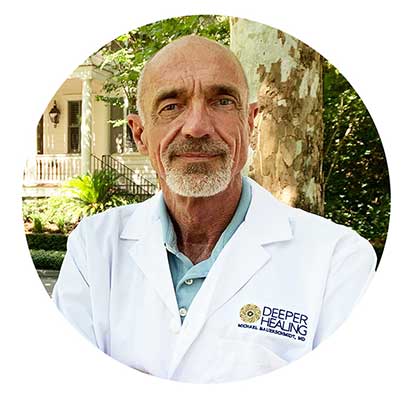
Medically reviewed by Michael Bauerschmidt, MD — Founder and Medical Director, Deeper Healing Medical Wellness Center. Board-certified physician specializing in functional and environmental medicine.
Last reviewed: August 2026.
This page is offered to provide education and isn’t a substitute for professional medical advice, diagnosis, or treatment. Symptoms can have many possible causes, ranging from minor to serious, and what’s true for one person may not be true for another. Always consult a qualified healthcare provider before making any health decisions. This content hasn’t been evaluated by the FDA and isn’t intended to diagnose, treat, cure, or prevent any disease. If you’re experiencing a medical emergency, contact your physician or local emergency services.
If you’d like personalized guidance from Deeper Healing, here is an invitation to learn more. And wherever you are on your journey, we encourage conscious, intentional choices that support your health and the planet’s. Every decision matters.