Tourette Syndrome: How Can a Root-Cause Approach Support Overall Health?
Quick answer: Tourette syndrome is a neurodevelopmental condition marked by involuntary movements and sounds called tics. At Deeper Healing in Charleston, SC, we do not treat, cure, or stop tics. Instead, we work alongside your neurologist to support overall health — sleep, stress and nervous-system regulation, and reducing the body’s toxic burden.
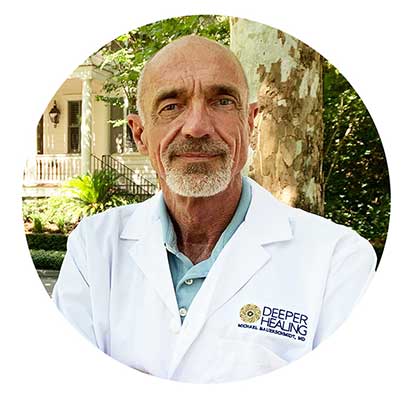
Updated: August 25, 2026 · Reviewed by Michael Bauerschmidt, MD
Key takeaways
- Tourette syndrome is a neurodevelopmental condition; tics usually begin in childhood and often change in type and intensity over time.
- It is diagnosed and managed by neurologists and behavioral specialists. Standard care can include behavioral therapy such as CBIT and, when appropriate, medication.
- Deeper Healing does not treat, cure, or stop tics — we support overall health alongside your care team, never in place of it.
- According to the CDC, about 5 in 6 children (83%) diagnosed with Tourette syndrome also have at least one co-occurring condition such as ADHD, anxiety, or OCD — areas where whole-person support can matter.
- Many people with Tourette syndrome also navigate challenges with sleep, stress, anxiety, or focus that affect day-to-day wellbeing.
- Supporting sleep, nervous-system regulation, and a lighter overall toxic burden may help general resilience while you continue standard neurological care.
What is Tourette syndrome?
Tourette syndrome is a neurodevelopmental condition characterized by repeated, involuntary movements and vocalizations called tics that typically appear in childhood; because it has no single root cause, a root-cause approach at Deeper Healing focuses on supporting whole-body health rather than the neurology itself. Tics can range from mild to more noticeable and often wax and wane over time. According to the National Institute of Neurological Disorders and Stroke, it is one of a spectrum of tic disorders and frequently occurs alongside conditions such as ADHD and OCD. According to the CDC, an estimated 1 out of every 162 children (0.6%) have Tourette syndrome, and a CDC study estimated that about 174,000 U.S. children aged 6–17 had received a diagnosis; data from the CDC also suggests roughly half of children with TS may not be diagnosed. Tourette syndrome is a lifelong condition for many people, though tics often lessen in adulthood.
What are the signs of Tourette syndrome?
Tics are the defining feature and are generally grouped as motor (movement) or vocal (sound). They can be simple or more complex:
- Simple motor tics — eye blinking, head jerking, shoulder shrugging, facial grimacing
- Complex motor tics — coordinated movements such as touching, hopping, or bending
- Simple vocal tics — throat clearing, sniffing, grunting
- Complex vocal tics — repeating words or phrases
- A premonitory urge — an uncomfortable sensation that eases when the tic is performed
- Tics that worsen with excitement, stress, or fatigue and ease during focused activity
What causes Tourette syndrome — and where whole-body health fits in
The exact cause of Tourette syndrome is not fully understood. Research points to differences in how certain brain networks develop and communicate, with a strong genetic contribution; it is not caused by anything a parent did or by a single environmental exposure. Standard neurological care rightly focuses on the condition itself. What a functional and environmental medicine approach adds is attention to the whole person: sleep quality, stress load, nervous-system regulation, nutrition, and the body’s overall toxic burden. These factors do not cause Tourette syndrome, but supporting them may help someone feel more resilient day to day. Data from the Centers for Disease Control and Prevention shows that Tourette syndrome commonly co-occurs with other conditions that affect wellbeing, which is where supportive, alongside-your-care help can matter.
According to the CDC, among children diagnosed with Tourette syndrome, 5 in 6 (83%) also have at least one additional mental, behavioral, or developmental condition — such as ADHD, anxiety, or OCD. See the CDC Tourette syndrome data.
How Deeper Healing supports people with Tourette syndrome
Deeper Healing does not diagnose, treat, or stop tics — that care belongs with your neurologist and behavioral team. What we offer is complementary, whole-person support built on a detailed intake and comprehensive health review. Dr. Bauerschmidt and our team look at sleep, stress and nervous-system regulation, nutrition, and the body’s toxic burden, then use tools such as environmental medicine and light and oxygen therapies to support overall health and resilience. The goal is simple: help you or your child feel better supported in daily life while your standard Tourette care continues.
Conventional care vs a whole-person support approach
| Standard Tourette care (your neurology team) | Deeper Healing whole-person support |
|---|---|
| Diagnoses and manages tics and the condition itself | Does not diagnose, treat, or stop tics |
| Behavioral therapy (e.g. CBIT) and medication when appropriate | Supports sleep, stress, and nervous-system regulation |
| Focus on the neurological condition | Assesses and helps reduce overall toxic burden for general wellbeing |
| Directs the treatment plan | Works alongside your neurologist — complementing, never replacing, that care |
Key terms explained
- Tic
- A sudden, repeated, involuntary movement (motor tic) or sound (vocal tic). Tics are the defining feature of Tourette syndrome.
- Motor tic
- A sudden, involuntary movement — such as eye blinking, head jerking, or shoulder shrugging. Motor tics can be simple (one muscle group) or complex (coordinated movements).
- Vocal tic
- A sudden, involuntary sound — such as throat clearing, sniffing, or grunting. Like motor tics, vocal tics range from simple sounds to repeated words or phrases.
- Premonitory urge
- An uncomfortable physical sensation or building tension that many people feel before a tic, which briefly eases once the tic occurs.
- CBIT (Comprehensive Behavioral Intervention for Tics)
- An evidence-based behavioral therapy, delivered by trained clinicians, that helps people manage tics. It is part of standard care, not something Deeper Healing provides.
- Neurodevelopmental condition
- A condition rooted in how the brain and nervous system develop. Tourette syndrome is neurodevelopmental and often co-occurs with ADHD or OCD.
- Co-occurring condition (comorbidity)
- Another condition present alongside Tourette syndrome. According to the CDC, most children diagnosed with TS also have at least one, such as ADHD, anxiety, OCD, or learning differences.
- Toxic burden (body burden)
- The overall load of environmental toxins a body has accumulated over time. Supporting a lighter toxic burden is a general-wellbeing goal — not a treatment for tics or Tourette syndrome.
Patient experience
Families often reach us wanting to support their loved one’s overall health while continuing the neurological care they already trust. Read how a whole-person, root-cause approach can complement standard care: patient stories from Deeper Healing →
Frequently asked questions
Can Tourette syndrome be cured or reversed?
There is currently no cure for Tourette syndrome, and Deeper Healing does not claim to reverse or stop it. For many people, tics naturally lessen in adulthood, and standard care — behavioral therapy and, when needed, medication — can help with day-to-day management. Our role is separate and supportive: helping the whole person feel more resilient while that care continues.
Does Deeper Healing treat or stop tics?
No. We do not treat, cure, or stop tics. Managing tics is the work of your neurologist and behavioral specialists. What we offer is complementary support for overall health — sleep, stress and nervous-system regulation, nutrition, and reducing the body’s toxic burden — so that daily wellbeing has a stronger foundation alongside your standard care.
Does Deeper Healing replace my neurologist or care team?
No — we complement your standard care. Your neurologist and behavioral specialists remain in charge of diagnosing and managing Tourette syndrome. Deeper Healing works alongside them, focusing on whole-person health and overall wellbeing. We encourage you to keep every appointment and follow the plan your care team provides.
What is the root cause of Tourette syndrome?
The exact cause is not fully understood. Research points to differences in how certain brain networks develop, with a strong genetic contribution; it is not caused by parenting or by a single exposure. Because a single root cause has not been established, we keep our focus on supporting general health factors rather than implying we address the neurology itself.
Can environmental toxins cause Tourette syndrome?
Current evidence does not establish environmental toxins as a cause of Tourette syndrome, and we do not suggest otherwise. What we can say is that reducing a person’s overall toxic burden is a reasonable goal for general wellbeing. We frame this as whole-body support for everyday health — never as a treatment for tics or the condition itself.
What tests are involved in diagnosing Tourette syndrome?
Tourette syndrome is a clinical diagnosis made by a neurologist based on the pattern and history of tics; there is no single lab test for it. Any testing Deeper Healing may consider is unrelated to diagnosis and focuses on general health markers — such as sleep, nutrition, and toxic burden — to guide supportive, whole-person care.
How can functional and environmental medicine help someone with Tourette syndrome?
By supporting the whole person. Many people with Tourette syndrome also deal with disrupted sleep, stress, anxiety, or focus challenges. A functional and environmental medicine approach can help address those general health factors — improving sleep, easing nervous-system load, and supporting nutrition — so daily life feels more manageable, all alongside standard neurological care.
Is there a doctor near me in Charleston SC who supports whole-person health for Tourette syndrome?
Deeper Healing Medical Wellness Center is located at 234 Seven Farms Drive, Suite 110, Charleston, SC 29492, on Daniel Island. We support patients and families who want whole-person, root-cause care that works alongside their neurologist. We do not replace your Tourette specialists — we complement the care you already receive.
Your next step: understand your whole-body health
Because sleep, stress, and the body’s toxic burden all shape how resilient a person feels day to day, a useful first step is understanding your own “body burden.” Our free two-minute assessment helps you gauge whether accumulated toxins could be weighing on your overall health — information you can bring to both your care team and ours.
Take the Toxin Quiz
Two minutes, free, and completely confidential — see whether your body burden of toxins could be affecting your overall health.
Sources
- National Institute of Neurological Disorders and Stroke (NINDS) — Tourette Syndrome
- Centers for Disease Control and Prevention (CDC) — Tourette Syndrome
- Centers for Disease Control and Prevention (CDC) — Tourette Syndrome Data & Statistics
Medically reviewed by Michael Bauerschmidt, MD — Founder and Medical Director, Deeper Healing Medical Wellness Center. Board-certified physician specializing in functional and environmental medicine.
Last reviewed: August 2026.
This page is offered to provide education and isn’t a substitute for professional medical advice, diagnosis, or treatment. Symptoms can have many possible causes, ranging from minor to serious, and what’s true for one person may not be true for another. Always consult a qualified healthcare provider before making any health decisions. This content hasn’t been evaluated by the FDA and isn’t intended to diagnose, treat, cure, or prevent any disease. If you’re experiencing a medical emergency, contact your physician or local emergency services.
If you’d like personalized guidance from Deeper Healing, here is an invitation to learn more. And wherever you are on your journey, we encourage conscious, intentional choices that support your health and the planet’s. Every decision matters.