Chemical Sensitivities (MCS / TILT): Can the Root Cause Be Addressed?
Quick answer: Chemical sensitivities — often called multiple chemical sensitivity (MCS) or toxicant-induced loss of tolerance (TILT) — describe reactions such as headaches, fatigue, and brain fog triggered by low levels of everyday chemicals. At Deeper Healing in Charleston, SC, we take an environmental-medicine approach that looks at total toxic burden, detoxification capacity, and nervous-system sensitization, and aims to reduce exposures in a deliberate order.
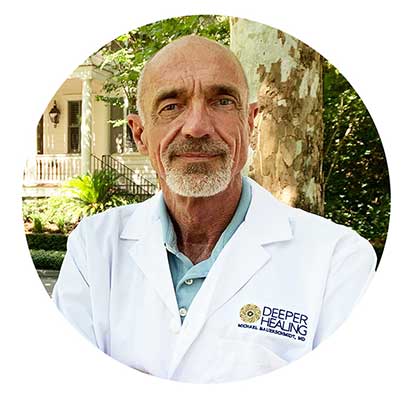
Updated: August 25, 2026 · Reviewed by Michael Bauerschmidt, MD
Key takeaways
- Chemical sensitivities describe symptoms triggered by low-level exposures to fragrances, solvents, smoke, pesticides, and other everyday chemicals.
- MCS/TILT is a contested and not universally recognized diagnosis — it has no agreed diagnostic test and no single ICD-10 code — yet many people experience these reactions as very real and disabling.
- Assessing chemical sensitivities sits squarely within environmental medicine, the core focus of Deeper Healing.
- Our root-cause lens looks at total toxic (body) burden, detoxification capacity, nervous-system sensitization, and overlapping mold or chemical exposures.
- The goal is to reduce exposures and support the body’s own tolerance — not to promise a cure.
What is multiple chemical sensitivity?
Multiple chemical sensitivity (MCS) is a pattern in which a person reports recurring symptoms — commonly headaches, fatigue, difficulty concentrating, nausea, or shortness of breath — after exposure to low levels of common chemicals that most people tolerate without issue, and the root-cause question is why that tolerance has dropped. The same concept is also described as toxicant-induced loss of tolerance (TILT), the idea that an initial toxic exposure can leave the body less able to tolerate a wide range of substances afterward. It is important to be candid: MCS/TILT is contested and not universally accepted as a distinct medical diagnosis, it has no confirmatory laboratory test, and it carries no agreed ICD-10 code. At the same time, evaluating how environmental exposures affect health is precisely the work of environmental medicine, which is the foundation of care at Deeper Healing.
What are the symptoms of chemical sensitivities?
Reactions vary widely from person to person and often involve several body systems at once:
- Headaches or migraines after chemical exposure
- Fatigue and low energy
- Brain fog, poor concentration, and memory complaints
- Nausea, dizziness, or lightheadedness
- Shortness of breath, throat irritation, or chest tightness
- Anxiety, irritability, or a sense of being “wired”
- Skin rashes, flushing, or itching
- Sensitivity that spreads to more substances over time
Common reported triggers include perfumes and fragrances, cleaning products, fresh paint, new carpet, vehicle exhaust, tobacco smoke, pesticides, and solvents.
What may drive chemical sensitivities — and why standard care can miss the deeper picture
Because chemical sensitivities have no single confirmatory test, standard evaluations often rule out other conditions and then stop, leaving people without a clear framework for what to do next. An environmental-medicine view asks a different question: what is the total load on this person’s system, and why has their tolerance dropped? In our experience, the picture often involves several overlapping factors — a high total toxic (body) burden, reduced detoxification capacity, prior or ongoing mold and chemical exposures, and a nervous system that has become sensitized so that small triggers produce large reactions. Electromagnetic-field (EMF) sensitivity is sometimes reported alongside these patterns as well.
According to the U.S. National Institute of Environmental Health Sciences (NIEHS), environmental agents such as solvents, pesticides, and airborne pollutants can affect human health, and NIEHS maintains dedicated research programs on mold and pesticides as environmental exposures. Data from the U.S. Environmental Protection Agency’s guidance on volatile organic compounds and indoor air quality notes that levels of many organic pollutants are consistently higher indoors than outdoors. Research from the U.S. National Library of Medicine’s MedlinePlus similarly catalogs indoor air pollutants and their reported health effects, and the CDC’s Agency for Toxic Substances and Disease Registry publishes toxicological profiles describing how individual substances move through and affect the body.
The U.S. National Institute of Environmental Health Sciences describes environmental agents as substances in air, water, food, and everyday products that can affect human health — a reminder that reviewing a person’s full exposure history is central to environmental medicine.
— Framing drawn from the NIEHS Environmental Agents program
How Deeper Healing approaches chemical sensitivities
Deeper Healing begins with a detailed intake and history of exposures, symptoms, and timing, paired with laboratory assessment where appropriate. Dr. Bauerschmidt and our team look for the specific exposures and imbalances contributing to a person’s reduced tolerance, then work to lower the total load in a deliberate order using environmental medicine alongside supportive therapies such as light and oxygen therapies. The emphasis is on reducing avoidable exposures, supporting the body’s detoxification pathways, and helping calm a sensitized nervous system. We use measured language on purpose: the aim is to support tolerance and quality of life, not to promise a cure.
Conventional care vs a root-cause approach
| Conventional evaluation | Deeper Healing environmental-medicine approach |
|---|---|
| Often stops after other conditions are ruled out | Maps total exposure history and body burden |
| May treat individual symptoms in isolation | Looks at detox capacity and nervous-system sensitization together |
| Rarely explores mold, chemical, or EMF exposures | Assesses mold, chemical, and environmental exposures |
| Limited guidance on reducing exposures | Builds a practical, ordered plan to lower total load |
Key terms explained
- Multiple chemical sensitivity (MCS)
- A reported pattern of recurring symptoms triggered by low-level exposure to multiple, chemically unrelated substances. It is contested as a formal diagnosis and has no confirmatory test.
- TILT (toxicant-induced loss of tolerance)
- A proposed two-stage model in which an initial toxic exposure leads to a lasting loss of tolerance, so that small everyday exposures later provoke symptoms.
- Idiopathic environmental intolerance (IEI)
- An umbrella term some clinicians and researchers use in place of MCS, emphasizing that the mechanism is not fully understood (“idiopathic”) while acknowledging the reported intolerance to environmental exposures.
- Total toxic (body) burden
- The cumulative load of chemicals, metals, and other stressors a body is carrying and trying to process at any given time.
- Detoxification capacity
- The body’s ability to process and eliminate chemicals and metabolic byproducts, largely through the liver, kidneys, gut, and other pathways; when it is reduced, burden can accumulate.
- Nervous-system sensitization
- A state in which the nervous system becomes more reactive over time, so that small triggers can produce disproportionately large symptom responses.
- Mycotoxins
- Toxic compounds produced by certain molds; exposure through water-damaged buildings is one of the environmental stressors that can add to total body burden.
- Environmental medicine
- The field that evaluates how environmental exposures — chemicals, mold, metals, and more — affect health, and that guides Deeper Healing’s root-cause assessment.
Patient experience
Many people arrive after being told there is “nothing measurably wrong,” even though ordinary environments leave them unwell. An environmental-medicine approach starts by taking those exposures seriously. Read more patient stories here: Deeper Healing patient testimonials →
Frequently asked questions
Can chemical sensitivities be reversed or improved?
There is no guaranteed cure, and MCS/TILT is not a fully agreed-upon diagnosis. That said, many people find their symptoms become more manageable when avoidable exposures are reduced, the body’s detoxification is supported, and a sensitized nervous system is given time to settle. Our aim is measured, gradual improvement in tolerance and quality of life rather than a promised reversal.
What is the root cause of chemical sensitivities?
There is rarely a single cause, and the science is still evolving. An environmental-medicine view usually finds a combination of factors: a high total toxic burden, reduced detoxification capacity, prior or ongoing mold and chemical exposures, and a nervous system that has become sensitized. Identifying which of these apply to you is the focus of our assessment.
Is MCS a real, recognized medical condition?
We want to be honest here: multiple chemical sensitivity is contested and not universally recognized as a distinct diagnosis, it has no confirmatory test, and no single ICD-10 code. At the same time, the symptoms people report are real and can be disabling. Evaluating how environmental exposures affect health is exactly what environmental medicine does.
What tests are used for chemical sensitivities?
No test confirms MCS/TILT itself. Instead, an environmental-medicine workup uses a detailed exposure history alongside laboratory assessment where appropriate to look for contributing factors — such as markers of total toxic burden, including mold (mycotoxins), heavy metals, and chemical exposures, alongside overall detoxification and health status — and to rule out other conditions that can mimic these symptoms.
Are chemical sensitivities related to mold or heavy metals?
They can overlap. Mold and mycotoxin exposure, accumulated heavy metals, and everyday chemical exposures are among the environmental stressors that may add to a person’s total body burden and reduce overall tolerance. Because these exposures often travel together, we assess them as part of the same overall picture rather than in isolation.
Can chemical sensitivities cause anxiety or brain fog?
Many people report anxiety, irritability, brain fog, and poor concentration as part of their reactions. A sensitized nervous system may amplify both physical and cognitive symptoms after low-level exposures. Addressing the underlying exposures and supporting the nervous system is part of how we approach these overlapping complaints.
Do I have to avoid all chemicals forever?
Reducing avoidable exposures is an important early step, but the longer-term goal is to lower total burden and support tolerance so that everyday life becomes more livable. Plans are practical and individualized, and any changes are made gradually. We focus on what is realistic for your home, work, and daily routine.
Where can I find a chemical sensitivity or environmental-medicine doctor near me?
Deeper Healing Medical Wellness Center is located at 234 Seven Farms Drive, Suite 110, Charleston, SC 29492, on Daniel Island. We focus on environmental medicine and see patients from across the country who travel to us after conventional evaluations have left their questions unanswered.
Your next step: find out what’s driving it
Because a high total burden of environmental toxins so often sits behind chemical sensitivities, the most useful first step is understanding your own “body burden.” Our free two-minute assessment helps you gauge whether accumulated toxins could be contributing to your symptoms — and what to do next.
Take the Toxin Quiz
Two minutes, free, and completely confidential — see whether your body burden of toxins could be driving your symptoms.
Sources
- National Institute of Environmental Health Sciences — Environmental Agents
- National Institute of Environmental Health Sciences — Mold
- National Institute of Environmental Health Sciences — Pesticides
- U.S. Environmental Protection Agency — Volatile Organic Compounds’ Impact on Indoor Air Quality
- U.S. National Library of Medicine, MedlinePlus — Indoor Air Pollution
- CDC / Agency for Toxic Substances and Disease Registry — Toxicological Profiles
Medically reviewed by Michael Bauerschmidt, MD — Founder and Medical Director, Deeper Healing Medical Wellness Center. Board-certified physician specializing in functional and environmental medicine.
Last reviewed: August 2026.
This page is offered to provide education and isn’t a substitute for professional medical advice, diagnosis, or treatment. Symptoms can have many possible causes, ranging from minor to serious, and what’s true for one person may not be true for another. Always consult a qualified healthcare provider before making any health decisions. This content hasn’t been evaluated by the FDA and isn’t intended to diagnose, treat, cure, or prevent any disease. If you’re experiencing a medical emergency, contact your physician or local emergency services.
If you’d like personalized guidance from Deeper Healing, here is an invitation to learn more. And wherever you are on your journey, we encourage conscious, intentional choices that support your health and the planet’s. Every decision matters.