Candida Overgrowth: Can the Root Cause Be Treated?
Quick answer: Candidiasis is an overgrowth of Candida yeast that normally lives in balance in the gut, mouth, skin, and vagina. When the microbiome, immune terrain, or toxic load shift, that balance can tip. At Deeper Healing in Charleston, SC, we look at the gut, immune, and detoxification drivers behind chronic candida imbalance, and address them in the right order.
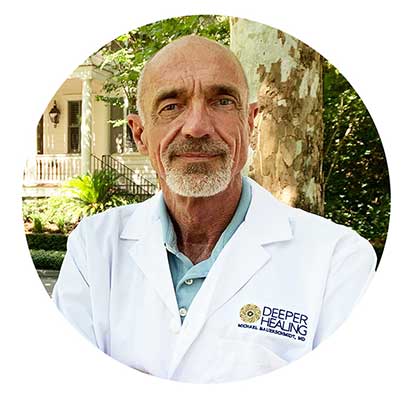
Updated: August 25, 2026 · Reviewed by Michael Bauerschmidt, MD
Key takeaways
- Candida is a yeast that normally lives harmlessly in the gut, mouth, skin, and vagina; problems begin when it overgrows and the microbiome falls out of balance.
- Everyday candidiasis is usually mucocutaneous — oral thrush, vaginal yeast infections, or skin-fold rashes — or a gut imbalance many people describe as “candida overgrowth.”
- Invasive or systemic candidiasis — Candida in the bloodstream or organs — is a serious medical emergency that requires urgent hospital care and is not the same as the functional gut imbalance discussed here.
- According to the CDC, an estimated 25,000 cases of candidemia (the invasive bloodstream form) occur in the United States each year — a serious, separate condition from the common gut and surface imbalance most people mean by “candida overgrowth.”
- Frequent antibiotics, high-sugar diets, chronic stress, and a weakened immune terrain are recognized contributors to yeast overgrowth.
- A root-cause approach focuses on restoring gut microbiome balance, supporting immune health, and reducing overall toxic burden rather than chasing symptoms alone.
What is candidiasis (candida overgrowth)?
Candida overgrowth (candidiasis) is an infection or overgrowth caused by Candida, a yeast that normally lives in small amounts in the digestive tract, mouth, skin, and vagina — and its root cause usually lies in a disrupted gut microbiome rather than in the yeast alone. In balance it is harmless. When conditions favor it — after a course of antibiotics, with a high-sugar diet, or when immune defenses are low — Candida can multiply and cause symptoms. Most cases are mucocutaneous (surface) infections such as oral thrush, vaginal yeast infections, or skin-fold rashes, or a broader gut microbiome imbalance. According to the Centers for Disease Control and Prevention, vaginal candidiasis is one of the most common fungal infections, while a separate and far more serious form — invasive candidiasis — occurs when the yeast enters the bloodstream or deep tissues.
Important: Invasive or systemic candidiasis is a medical emergency. High fever and chills that do not improve — especially in someone who is hospitalized, has a central line, or is immunocompromised — require urgent medical evaluation. Data from the CDC show that invasive candidiasis carries an in-hospital all-cause mortality of approximately 30%, and one population-based analysis attributed 19% to 24% of deaths among infected patients to candidemia itself. The root-cause, functional-medicine approach described on this page is intended for common mucocutaneous and gut-related candida imbalance, not for invasive infection.
What are the symptoms of candida overgrowth?
Because Candida can affect several sites, common (non-invasive) symptoms are wide-ranging:
- White patches in the mouth or throat (oral thrush)
- Vaginal itching, burning, and discharge (yeast infection)
- Red, itchy rashes in warm skin folds
- Bloating, gas, and digestive discomfort
- Strong sugar and refined-carbohydrate cravings
- Brain fog and fatigue
- Recurrent infections that keep returning after treatment
What causes candida overgrowth — and why standard care can miss the deeper drivers
Standard care usually treats the visible infection with an antifungal — a cream, a suppository, or a short oral course. That often clears the immediate symptom, but it does not answer the deeper question: why did the yeast overgrow in the first place, and why does it keep coming back? In a functional-medicine view, chronic candida imbalance typically follows a disruption of the gut microbiome — an imbalance known as dysbiosis, driven by repeated antibiotics, a high-sugar diet, chronic stress, or a weakened immune terrain — sometimes compounded by an overall toxic burden. When the protective community of gut bacteria is depleted, yeast can expand and irritate the intestinal lining, an overlap patients often experience alongside leaky gut and IBS-type symptoms. When those drivers go unaddressed, the overgrowth tends to return.
An estimated 25,000 cases of candidemia occur in the United States each year, as reported by the CDC, and invasive candidiasis carries an in-hospital all-cause mortality of approximately 30% — a reminder that the invasive bloodstream form is a distinct, urgent condition, separate from the common gut and surface imbalance addressed here. CDC Candidiasis: Data & Statistics →
How Deeper Healing approaches candida overgrowth
Deeper Healing takes a root-cause approach built on a detailed intake and comprehensive lab analysis — not a single swab in isolation. Dr. Bauerschmidt and our team look for the specific microbiome imbalances, immune weaknesses, and toxic exposures that let yeast overgrow, then address them in a deliberate order using environmental medicine, light and oxygen therapies, dietary change, and targeted gut and immune support. The aim is to rebuild a resilient internal terrain so the overgrowth is less likely to return — not simply to suppress one flare. For any suspected invasive infection, we direct patients to appropriate urgent medical care.
Conventional care vs a root-cause approach
| Conventional candida care | Deeper Healing root-cause approach |
|---|---|
| Treats the visible infection with an antifungal | Looks for why the yeast overgrew in the first place |
| Focuses on the affected site (mouth, skin, vagina) | Assesses the whole gut microbiome and immune terrain |
| Symptoms often recur after treatment stops | Aims to rebuild balance so overgrowth is less likely to return |
| Rarely reviews diet, antibiotics, or toxic burden | Addresses diet, microbiome, immune health, and toxic burden together |
Key terms explained
- Candida albicans
- The most common Candida species in humans. It lives normally in the gut and on mucous membranes and only causes problems when it overgrows.
- Mucocutaneous candidiasis
- Surface infections of the skin and mucous membranes — oral thrush, vaginal yeast infections, and skin-fold rashes. These are the common, non-invasive forms of candidiasis.
- Dysbiosis
- An imbalance in the community of microbes in the gut. Loss of protective bacteria — often after antibiotics — can allow yeast such as Candida to expand.
- Oral thrush
- A Candida overgrowth in the mouth or throat that produces white patches, redness, or soreness. It is one of the most recognizable mucocutaneous forms.
- Intestinal permeability (“leaky gut”)
- A weakening of the intestinal barrier that lets contents pass through more easily. It frequently overlaps with candida overgrowth and IBS-type symptoms.
- Antifungal
- A medication — cream, suppository, or oral course — that clears an active yeast infection but does not address why the overgrowth developed or keeps returning.
- Candidemia
- Candida in the bloodstream. It is the most common form of invasive candidiasis, a medical emergency that is distinct from everyday surface and gut imbalance.
- Invasive candidiasis
- A serious infection in which Candida enters the bloodstream or internal organs. It is a medical emergency and is distinct from the surface and gut imbalance most people mean by “candida overgrowth.”
Patient experience
Many patients arrive frustrated after yeast infections or gut symptoms that keep returning despite repeated antifungal courses. Read how a root-cause approach looks beyond the flare to the terrain underneath: Deeper Healing patient stories →
Frequently asked questions
Can candida overgrowth be reversed or improved?
For common gut and mucocutaneous candida imbalance, many patients improve when the underlying drivers are addressed rather than only the flare. By restoring microbiome balance, supporting immune health, adjusting diet, and reducing toxic burden, the aim is to make overgrowth less likely to return. Results vary from person to person, and no outcome can be guaranteed.
What is the root cause of chronic candida overgrowth?
There is rarely a single cause. Chronic overgrowth usually follows a disruption of the gut microbiome — from repeated antibiotics, a high-sugar diet, chronic stress, or a weakened immune terrain — sometimes with an added toxic burden. Our work focuses on identifying which of these drivers apply to you so treatment targets the actual cause, not just the symptom.
What is the difference between candida overgrowth and invasive candidiasis?
Everyday candidiasis is a surface or gut imbalance — thrush, yeast infections, skin-fold rashes, or digestive symptoms. Invasive candidiasis is a separate, serious condition in which Candida enters the bloodstream or organs, usually in hospitalized or immunocompromised people. It is a medical emergency requiring urgent hospital care and is not what a functional gut-health program is designed to treat.
Is candida overgrowth related to leaky gut or IBS?
They frequently overlap. When protective gut bacteria are depleted, yeast can expand and irritate the intestinal lining, contributing to increased intestinal permeability (“leaky gut”) and IBS-type symptoms such as bloating and irregular digestion. Because these problems share common drivers, we assess and support the gut as a whole rather than treating each label in isolation.
What tests are used for candida overgrowth?
Depending on the picture, evaluation may include a clinical history, examination of affected sites, and comprehensive stool or microbiome testing that looks at yeast and bacterial balance. We pair this with assessment of diet, antibiotic history, immune function, and toxic exposures — including a toxin workup for mold (mycotoxins), heavy metals, and chemicals — so any treatment plan reflects your individual situation. Suspected invasive infection requires urgent conventional medical testing.
Can antibiotics and sugar cause candida overgrowth?
Both are recognized contributors. Antibiotics can reduce the protective gut bacteria that normally keep yeast in check, and diets high in sugar and refined carbohydrates can favor yeast growth. Neither guarantees overgrowth, but together with stress and a weakened immune terrain they help create the conditions in which Candida can expand.
Does Deeper Healing replace my regular doctor or specialist?
No — we complement your standard medical care, we do not replace it. For invasive candidiasis or any acute infection, conventional and emergency care come first, and you should never stop a prescribed medication without talking to the physician who ordered it. Our role is to support your overall gut, immune, and detoxification health alongside that care.
Where can I find a root-cause candida doctor near me?
Deeper Healing Medical Wellness Center is located at 234 Seven Farms Drive, Suite 110, Charleston, SC 29492, on Daniel Island. We see patients from across the country who travel to us for root-cause, functional and environmental medicine care after standard treatment has fallen short.
Your next step: find out what’s driving it
Because an overall toxic burden and a stressed internal terrain so often sit alongside chronic candida overgrowth, a useful first step is understanding your own “body burden.” Our free two-minute assessment helps you gauge whether accumulated toxins could be adding to the load on your gut and immune system — and what to do next.
Take the Toxin Quiz
Two minutes, free, and completely confidential — see whether your body burden of toxins could be adding to your symptoms.
Sources
- Centers for Disease Control and Prevention — About Candidiasis
- Centers for Disease Control and Prevention — Candidiasis Risk Factors
- Centers for Disease Control and Prevention — Candidiasis: Data & Statistics
- Centers for Disease Control and Prevention — Candidiasis: Clinical Overview for Healthcare Providers
Medically reviewed by Michael Bauerschmidt, MD — Founder and Medical Director, Deeper Healing Medical Wellness Center. Board-certified physician specializing in functional and environmental medicine.
Last reviewed: August 2026.
This page is offered to provide education and isn’t a substitute for professional medical advice, diagnosis, or treatment. Symptoms can have many possible causes, ranging from minor to serious, and what’s true for one person may not be true for another. Always consult a qualified healthcare provider before making any health decisions. This content hasn’t been evaluated by the FDA and isn’t intended to diagnose, treat, cure, or prevent any disease. If you’re experiencing a medical emergency, contact your physician or local emergency services.
If you’d like personalized guidance from Deeper Healing, here is an invitation to learn more. And wherever you are on your journey, we encourage conscious, intentional choices that support your health and the planet’s. Every decision matters.