Chronic Fatigue Syndrome (ME/CFS): Can the Root Cause Be Treated?
Quick answer: Chronic fatigue syndrome (ME/CFS) is a complex, long-term illness marked by profound fatigue that rest does not relieve and that worsens after exertion. At Deeper Healing in Charleston, SC, we look beyond a “normal” lab panel to the root drivers — chronic infections, mold, and heavy metals — that fuel mitochondrial and immune dysfunction, and address them in the right order.
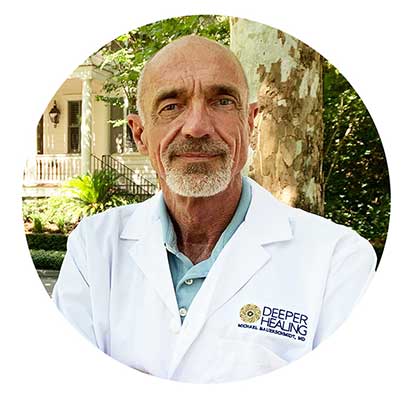
Reviewed & updated August 2026 by Michael Bauerschmidt, MD
Key takeaways
- Chronic fatigue syndrome, also called myalgic encephalomyelitis (ME/CFS), is a serious biological illness — not simply being tired or “out of shape.”
- Its hallmark is post-exertional malaise: a crash in energy and function after even minor physical or mental effort.
- Standard blood work often looks “normal,” which is why so many patients are dismissed.
- Common root drivers include chronic infections such as Epstein-Barr virus, mold and mycotoxin exposure, heavy metals, and mitochondrial dysfunction — often overlapping with mold illness and post-viral syndromes.
- A root-cause, functional and environmental medicine approach aims to identify and treat those drivers rather than only manage symptoms.
What is chronic fatigue syndrome (ME/CFS)?
Chronic fatigue syndrome is a complex, long-term illness that affects multiple body systems and limits a person’s ability to carry out ordinary daily activities. Also known as myalgic encephalomyelitis (ME/CFS), it is defined by disabling fatigue lasting at least six months that is not improved by rest, together with worsening of symptoms after exertion, unrefreshing sleep, and difficulty with memory and concentration. According to the Centers for Disease Control and Prevention, ME/CFS is a biological illness — not a psychological disorder — and many people who have it have never been diagnosed.
What are the symptoms of chronic fatigue?
Symptoms vary from person to person and often fluctuate, but the pattern is distinctive:
- Post-exertional malaise — a marked crash after physical or mental activity
- Profound fatigue that rest and sleep do not relieve
- Unrefreshing sleep — waking still exhausted
- Brain fog, poor concentration, and memory problems
- Dizziness or lightheadedness on standing (orthostatic intolerance)
- Muscle and joint pain
- Headaches
- Sore throat and tender lymph nodes
- Heightened sensitivity to light, sound, or chemicals
What causes chronic fatigue — and why it’s often missed
Conventional evaluation usually runs a standard panel, finds nothing clearly abnormal, and leaves the patient without answers — or with the suggestion that the problem is stress or depression. That misses the deeper question: what is actually depleting the body’s energy systems? In our experience, chronic fatigue frequently traces back to identifiable biological drivers: chronic or reactivated infections such as Epstein-Barr virus (EBV), exposure to mold and mycotoxins, accumulated heavy metals, and mitochondrial dysfunction — the impairment of the cellular machinery that produces energy. These often overlap with mold illness and post-viral illness, including symptoms that persist after infections. The National Institute of Neurological Disorders and Stroke notes that ME/CFS often follows an infection and involves problems with energy metabolism and immune function. When those drivers go unrecognized, patients cycle through specialists while never feeling well.
How Deeper Healing treats chronic fatigue
Deeper Healing takes a root-cause approach built on detailed intake and comprehensive lab analysis — not a single “normal” result. Dr. Bauerschmidt and our team look for the specific infections, toxins, and mitochondrial and immune imbalances behind the exhaustion, then treat them in a deliberate order using environmental medicine, light and oxygen therapies, and targeted detoxification and cellular support. The goal is to restore the body’s ability to make and use energy so patients can regain function and quality of life — carefully, respecting the post-exertional pattern that makes ME/CFS unique.
Conventional care vs a root-cause approach
| Conventional chronic fatigue care | Deeper Healing root-cause approach |
|---|---|
| Runs a standard panel; often calls it “normal” | Targeted testing for infections, mold, metals, and mitochondrial function |
| Attributes symptoms to stress or depression | Treats ME/CFS as a biological illness with identifiable drivers |
| Offers symptom management or generic advice to exercise | Sequences treatment while respecting post-exertional malaise |
| Rarely investigates toxins or chronic infection | Reduces toxic body burden and supports cellular energy production |
Key terms explained
- ME/CFS (myalgic encephalomyelitis / chronic fatigue syndrome)
- A complex, long-term biological illness defined by disabling fatigue, post-exertional malaise, unrefreshing sleep, and cognitive difficulty lasting at least six months.
- Post-exertional malaise (PEM)
- A hallmark of ME/CFS: a delayed crash in energy and function after physical or mental exertion that would previously have been tolerated.
- Mitochondria
- The energy-producing structures inside cells. When they are impaired, the body cannot generate or use energy normally — a central problem in chronic fatigue.
- Mycotoxins
- Toxic compounds produced by mold that can act as immune stressors and contribute to fatigue and other chronic symptoms.
Patient experience
Many patients arrive after being told their labs are “normal” despite being unable to work or get through a day. Read how nutrient infusions and a root-cause approach help at the cellular level: IV therapy for chronic fatigue, brain fog, mold illness, and post-COVID symptoms →
Frequently asked questions
What causes chronic fatigue syndrome?
There is rarely a single cause. ME/CFS often develops after an infection and involves overlapping drivers — reactivated viruses such as Epstein-Barr, mold and mycotoxin exposure, accumulated heavy metals, immune dysregulation, and mitochondrial dysfunction that impairs cellular energy production. Our work focuses on identifying which of these drivers apply to you rather than treating the label alone.
Is ME/CFS the same as chronic fatigue?
Not quite. “Chronic fatigue” is a symptom that can accompany many conditions. Chronic fatigue syndrome, or myalgic encephalomyelitis (ME/CFS), is a specific, diagnosable illness defined by disabling fatigue lasting at least six months, post-exertional malaise, unrefreshing sleep, and cognitive problems. The distinction matters because it changes how the problem is investigated and treated.
Can chronic fatigue be treated?
ME/CFS cannot always be “cured,” but many patients improve meaningfully when the underlying drivers are found and addressed. By treating chronic infections, reducing toxic body burden, and supporting mitochondrial and immune function, the goal is to restore energy and daily function rather than simply managing symptoms — while carefully respecting post-exertional malaise.
Is chronic fatigue linked to EBV or mold?
Frequently, yes. Chronic or reactivated Epstein-Barr virus (EBV) and exposure to mold and mycotoxins are among the most common drivers we see in patients with chronic fatigue. These exposures stress the immune system and impair cellular energy production, and their symptoms overlap heavily with ME/CFS, which is why testing for them is central to our evaluation.
Why do doctors say my tests are normal?
Standard panels are not designed to detect the drivers behind ME/CFS. Reactivated infections, mycotoxins, heavy metals, and mitochondrial dysfunction do not show up on routine blood work, so results can look “normal” while you remain profoundly unwell. Fuller, targeted testing frequently reveals what a basic panel misses.
Does chronic fatigue cause brain fog?
Yes. Cognitive difficulty — often called brain fog — is a core feature of ME/CFS, alongside post-exertional malaise and unrefreshing sleep. Problems with memory, focus, and processing speed reflect the same underlying issues with energy metabolism, immune activation, and toxic burden that drive the physical fatigue.
Where can I find a chronic fatigue doctor near me?
Deeper Healing Medical Wellness Center is located at 234 Seven Farms Drive, Suite 110, Charleston, SC 29492, on Daniel Island. We see patients from across the country who travel to us for root-cause care of chronic fatigue after standard treatment has fallen short.
Your next step: find out what’s driving it
Because hidden infections and environmental toxins so often sit at the root of chronic fatigue, the most useful first step is understanding your own “body burden.” Our free two-minute assessment helps you gauge whether accumulated toxins could be fueling your exhaustion — and what to do next.
Take the Toxin Quiz
Two minutes, free, and completely confidential — see whether your body burden of toxins could be driving your symptoms.
Sources
- Centers for Disease Control and Prevention — Myalgic Encephalomyelitis/Chronic Fatigue Syndrome (ME/CFS)
- National Institute of Neurological Disorders and Stroke (NIH) — Myalgic Encephalomyelitis/Chronic Fatigue Syndrome
Medically reviewed by Michael Bauerschmidt, MD — Founder and Medical Director, Deeper Healing Medical Wellness Center. Board-certified physician specializing in functional and environmental medicine.
Last reviewed: August 2026.
Deeper Healing Medical Wellness Center · 234 Seven Farms Drive, Suite 110, Charleston, SC 29492 · (843) 253-7302
This page is offered to provide education and isn’t a substitute for professional medical advice, diagnosis, or treatment. Symptoms can have many possible causes, ranging from minor to serious, and what’s true for one person may not be true for another. Always consult a qualified healthcare provider before making any health decisions. This content hasn’t been evaluated by the FDA and isn’t intended to diagnose, treat, cure, or prevent any disease. If you’re experiencing a medical emergency, contact your physician or local emergency services.
If you’d like personalized guidance from Deeper Healing, here is an invitation to learn more. And wherever you are on your journey, we encourage conscious, intentional choices that support your health and the planet’s. Every decision matters.