Graves’ Disease: Can the Root Cause of Autoimmune Hyperthyroidism Be Addressed?
Quick answer: Graves’ disease is an autoimmune form of hyperthyroidism in which antibodies overstimulate the thyroid, driving rapid heartbeat, weight loss, anxiety, and tremor. At Deeper Healing in Charleston, SC, we complement your endocrinologist’s care by looking for the root triggers — environmental toxins, chronic infections, and gut and immune dysfunction — that can provoke the autoimmune attack, and addressing them in the right order.
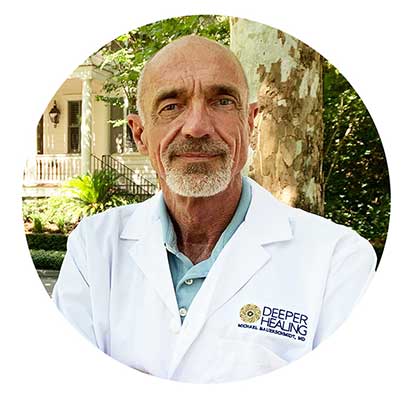
Updated: August 25, 2026 · Reviewed by Michael Bauerschmidt, MD
Key takeaways
- Graves’ disease is the most common cause of hyperthyroidism (an overactive thyroid) and is autoimmune in origin. According to the National Institute of Diabetes and Digestive and Kidney Diseases (NIDDK), about 80% of hyperthyroidism cases in the United States are caused by Graves’ disease.
- It affects nearly 1 in 100 Americans, and data from the NIDDK show it is more common in women and in people older than age 30.
- It is essentially the mirror image of Hashimoto’s: in Graves’, antibodies overstimulate the thyroid instead of destroying it.
- Untreated hyperthyroidism can be dangerous, so standard care from an endocrinologist is important — our work is meant to complement, never replace, it.
- Common root triggers that can fuel autoimmunity include environmental toxins, chronic infections, and gut and immune dysfunction.
- A root-cause, functional and environmental medicine approach aims to support the immune system and overall health alongside your medical treatment.
What is Graves’ disease?
Graves’ disease is an autoimmune disorder that is the root cause of most hyperthyroidism, in which the immune system produces antibodies that stimulate the thyroid gland to make too much thyroid hormone — an overactive thyroid that speeds up the body’s metabolism. According to the National Institute of Diabetes and Digestive and Kidney Diseases, about 80% of hyperthyroidism cases in the United States are caused by Graves’ disease, and it affects nearly 1 in 100 Americans — far more women than men. For context, data from the NIDDK note that about 1 out of 100 Americans ages 12 and older have hyperthyroidism of some kind. Because untreated hyperthyroidism can strain the heart and, in rare cases, escalate to a thyroid storm, Graves’ disease should always be managed with a qualified physician.
What are the symptoms of Graves’ disease?
Because thyroid hormone influences the whole body, an overactive thyroid produces wide-ranging symptoms that often come on quickly:
- Rapid or irregular heartbeat (palpitations)
- Unexplained weight loss despite normal appetite
- Anxiety, irritability, and restlessness
- Hand tremors
- Heat intolerance and increased sweating
- Trouble sleeping
- Muscle weakness and fatigue
- Frequent bowel movements
- Bulging or irritated eyes (Graves’ eye disease)
- An enlarged thyroid, or goiter
What causes Graves’ disease — and where a root-cause view adds to standard care
Conventional care confirms an overactive thyroid with blood tests and manages the excess hormone with antithyroid medication, radioactive iodine, or surgery. Those treatments are important and can be lifesaving, but they focus on lowering thyroid output rather than on the deeper question: why did the immune system begin overstimulating the thyroid in the first place? Research from the National Institute of Environmental Health Sciences links environmental exposures — including heavy metals such as lead and mercury, mold, and chemicals — to the development of autoimmune disease. In functional and environmental medicine we look at whether triggers such as these toxins, chronic viral or bacterial infections, and gut and immune dysregulation may be contributing to a person’s body burden.
According to the NIDDK, “more than 1 in 3 people with Graves’ disease develop an eye disease called Graves’ ophthalmopathy” — over 33% of patients — which is one reason a whole-body view of the immune system matters.
Graves’ disease is the autoimmune “opposite” of Hashimoto’s thyroiditis — one speeds the thyroid up, the other slows it down — and both sit within the broader family of autoimmune disease. Addressing these root drivers is meant to support your overall health alongside, not instead of, your endocrinologist’s treatment.
How Deeper Healing supports patients with Graves’ disease
Deeper Healing takes a root-cause approach built on detailed intake and comprehensive lab analysis — working alongside the care you receive from your endocrinologist, never in place of it. Dr. Bauerschmidt and our team look for the specific toxins, infections, and imbalances that may be fueling the autoimmune process, then address them in a deliberate order using environmental medicine, light and oxygen therapies, and targeted detoxification and immune support. The goal is to support your immune system and overall health while you continue any medication or treatment your physician has prescribed. We never advise stopping prescribed thyroid or antithyroid medication.
Conventional care vs a root-cause approach
| Conventional hyperthyroid care | Deeper Healing root-cause approach |
|---|---|
| Screens TSH, free T4 and free T3 | Reviews the full thyroid panel plus antibodies (TRAb, TSI, TPO) alongside your specialist |
| Antithyroid drugs, radioactive iodine, or thyroidectomy | Works alongside that treatment to identify and address possible immune triggers |
| Focuses on lowering thyroid hormone output | Explores why the immune system is overstimulating the thyroid |
| Rarely tests for toxins or infections | Tests for heavy metals, mold (mycotoxins), chemicals, chronic infections, and gut health |
Key terms explained
- Hyperthyroidism
- An overactive thyroid that produces too much thyroid hormone, speeding up metabolism. Graves’ disease is its most common cause.
- TRAb (TSH receptor antibodies)
- Antibodies that bind the thyroid’s TSH receptor. In Graves’ disease they switch the receptor “on,” driving the gland to overproduce hormone.
- TSI (thyroid-stimulating immunoglobulin)
- A specific type of TRAb that stimulates the thyroid. A positive TSI test helps confirm Graves’ disease.
- Graves’ eye disease (thyroid eye disease)
- Autoimmune inflammation behind the eyes that can cause bulging, irritation, or double vision in some people with Graves’ disease. The NIDDK notes more than 1 in 3 patients develop it.
- Goiter
- A visible enlargement of the thyroid gland in the neck, which can occur when the gland is overstimulated in Graves’ disease.
- Thyroid storm
- A rare but life-threatening surge of thyroid hormone that can occur with severe, untreated hyperthyroidism — one reason ongoing endocrinology care is essential.
- Radioactive iodine (RAI) therapy
- A common conventional treatment in which radioactive iodine-131, taken by mouth, reduces the thyroid’s ability to overproduce hormone.
- Body burden
- The accumulated load of environmental toxins — heavy metals, mold, and chemicals — carried in the body, which functional and environmental medicine seeks to identify and reduce.
Patient experience
Many patients come to us wanting to understand what is driving their autoimmune condition, not just manage the numbers — while staying under the care of their specialist. Read more first-hand stories from people who pursued a root-cause path: Deeper Healing patient testimonials →
Frequently asked questions
Can Graves’ disease be reversed or put into remission?
Some people with Graves’ disease do reach remission, often with antithyroid medication managed by an endocrinologist. A root-cause approach aims to support that process by addressing possible immune triggers such as toxins, infections, and gut dysfunction. We cannot promise a cure, and any path toward remission should be guided by your treating physician.
What is the root cause of Graves’ disease?
There is rarely a single cause. Graves’ disease typically develops when a genetically susceptible person accumulates immune stressors over time — environmental toxins such as heavy metals, mold, and chemicals, chronic infections, gut barrier dysfunction, and physical or emotional stress. Our work focuses on identifying which of these possible drivers may apply to you.
Is Graves’ disease autoimmune?
Yes. Graves’ disease is an autoimmune disorder in which antibodies stimulate the thyroid to overproduce hormone. It is the autoimmune mirror image of Hashimoto’s thyroiditis, which slows the thyroid down. Both fall within the broader category of autoimmune disease, where the immune system mistakenly targets the body’s own tissue.
What tests diagnose Graves’ disease?
Graves’ disease is confirmed with a thyroid panel showing low TSH and high thyroid hormones, plus antibody testing (TRAb and TSI). Imaging or a radioactive iodine uptake scan may also be used. Alongside your specialist’s diagnosis, we add testing for the toxins, infections, and gut imbalances that may be driving the autoimmune process.
Can environmental toxins and infections trigger Graves’ disease?
Research links environmental exposures — including heavy metals, mold and mycotoxins, and chemicals — and chronic infections to the development of autoimmune disease. These are recognized immune stressors that may provoke or worsen thyroid autoimmunity in susceptible people. Identifying and reducing this “body burden” is central to how we approach Graves’ disease alongside standard care.
How is Graves’ disease different from Hashimoto’s?
Both are autoimmune thyroid conditions, but they pull in opposite directions. In Graves’, antibodies overstimulate the thyroid, causing hyperthyroidism. In Hashimoto’s, the immune system gradually damages the thyroid, causing hypothyroidism. Because the underlying immune dysfunction overlaps, the root-cause questions we ask are similar for both.
Does Deeper Healing replace my endocrinologist?
No — we complement your standard care. Untreated hyperthyroidism can be serious, so ongoing management with your endocrinologist is essential. Our role is to work alongside that care, looking for root triggers of the autoimmune process and supporting your overall health. We never advise stopping prescribed thyroid or antithyroid medication.
Where can I find a root-cause Graves’ disease doctor near me?
Deeper Healing Medical Wellness Center is located at 234 Seven Farms Drive, Suite 110, Charleston, SC 29492, on Daniel Island. We see patients from across the country who travel to us for root-cause care to complement their existing endocrinology treatment.
Your next step: find out what’s driving it
Because hidden environmental toxins so often sit among the roots of autoimmune conditions like Graves’ disease, a useful first step is understanding your own “body burden.” Our free two-minute assessment helps you gauge whether accumulated toxins could be contributing to your immune dysfunction — a helpful complement to the care you receive from your specialist.
Take the Toxin Quiz
Two minutes, free, and completely confidential — see whether your body burden of toxins could be contributing to your symptoms.
Sources
- National Institutes of Health, NIDDK — Graves’ Disease
- National Institutes of Health, NIDDK — Hyperthyroidism
- National Institute of Environmental Health Sciences — Autoimmune Diseases
- National Institute of Environmental Health Sciences — Lead
- National Institute of Environmental Health Sciences — Mold
Medically reviewed by Michael Bauerschmidt, MD — Founder and Medical Director, Deeper Healing Medical Wellness Center. Board-certified physician specializing in functional and environmental medicine.
Last reviewed: August 2026.
This page is offered to provide education and isn’t a substitute for professional medical advice, diagnosis, or treatment. Symptoms can have many possible causes, ranging from minor to serious, and what’s true for one person may not be true for another. Always consult a qualified healthcare provider before making any health decisions. This content hasn’t been evaluated by the FDA and isn’t intended to diagnose, treat, cure, or prevent any disease. If you’re experiencing a medical emergency, contact your physician or local emergency services.
If you’d like personalized guidance from Deeper Healing, here is an invitation to learn more. And wherever you are on your journey, we encourage conscious, intentional choices that support your health and the planet’s. Every decision matters.