Hypothyroidism: Can the Root Cause Be Treated?
Quick answer: Hypothyroidism is an underactive thyroid that produces too little thyroid hormone, causing fatigue, weight gain, and brain fog. At Deeper Healing in Charleston, SC, we look beyond a single TSH result to the root drivers — nutrient status, gut health, environmental toxins, and the autoimmune process behind most cases — and address them in the right order.
Updated: August 25, 2026 · Reviewed by Michael Bauerschmidt, MD
Key takeaways
- Hypothyroidism means the thyroid gland is underactive and makes too little thyroid hormone.
- According to the NIDDK, about 5% of Americans aged 12 and older have hypothyroidism — most cases mild, and far more common in women.
- In the United States, most hypothyroidism is autoimmune — the result of Hashimoto’s thyroiditis.
- A “normal” TSH does not always tell the full story; fuller testing and thyroid antibodies often do.
- Nutrient status, gut function, and environmental toxins all influence how well the thyroid works.
- Thyroid hormone replacement can relieve symptoms but does not address why the thyroid slowed down.
- A root-cause, functional and environmental medicine approach aims to support thyroid function rather than only adjust medication.
What is hypothyroidism?
Hypothyroidism is a condition in which the thyroid gland does not produce enough thyroid hormone to meet the body’s needs — and its root cause can often be identified and treated, not just masked with daily medication. It slows metabolism and affects energy, weight, mood, temperature, and nearly every organ system, and it can develop when the gland itself is under attack, when the body cannot convert or use thyroid hormone efficiently, or when key nutrients and signals are missing. According to the National Institute of Diabetes and Digestive and Kidney Diseases (NIDDK), about 5% of Americans aged 12 and older have hypothyroidism, though many cases are mild, and it is far more common in women and in people older than 60. Some people have subclinical hypothyroidism — an early, milder form in which TSH is elevated but thyroid hormone levels still sit within the standard range.
“Nearly 5 out of 100 Americans ages 12 years and older have hypothyroidism, although most cases are mild,” reports the NIDDK.
What are the symptoms of hypothyroidism?
Because thyroid hormone influences the whole body, symptoms are wide-ranging and often build slowly:
- Persistent fatigue and low energy
- Unexplained weight gain or difficulty losing weight
- Brain fog and poor concentration
- Cold intolerance
- Hair thinning and dry skin
- Constipation
- Depression or low mood
- Muscle aches and weakness
- Irregular or heavy menstrual cycles
- Puffiness and a slowed heart rate
What causes hypothyroidism — and why standard treatment often misses it
Conventional care usually confirms an underactive thyroid with a TSH test and prescribes thyroid hormone replacement such as levothyroxine — a synthetic form of the T4 hormone. That can relieve symptoms, but it does not answer the deeper question: why did the thyroid slow down in the first place? According to the NIDDK, Hashimoto’s disease is the most common cause of hypothyroidism in the United States, an autoimmune process in which the immune system attacks the gland. Underneath that — and behind non-autoimmune cases — we often find nutrient shortfalls (iodine, selenium, iron, and others), gut dysfunction that impairs hormone conversion, and environmental toxins that stress the thyroid. Research from the National Institute of Environmental Health Sciences links environmental exposures to the development of autoimmune disease. When those drivers go unaddressed, patients often need higher doses over time while never feeling truly well.
How Deeper Healing treats hypothyroidism
Deeper Healing takes a root-cause approach built on detailed intake and comprehensive lab analysis — not just a single TSH value. Dr. Bauerschmidt and our team look for the specific nutrient gaps, gut imbalances, toxins, and autoimmune drivers behind an underactive thyroid, then address them in a deliberate order using environmental medicine, light and oxygen therapies, and targeted detoxification and nutritional support. The goal is to support healthy thyroid function and help patients regain energy and quality of life, working alongside any thyroid medication they take.
Conventional care vs a root-cause approach
| Conventional thyroid care | Deeper Healing root-cause approach |
|---|---|
| Screens mainly TSH | Full thyroid panel plus antibodies (TPO, TgAb) |
| Replaces thyroid hormone (e.g. levothyroxine) | Identifies the nutrient, gut, toxin, and immune drivers behind the low output |
| Manages symptoms; dose often escalates over time | Aims to support thyroid function and quality of life |
| Rarely tests for toxins, nutrients, or infections | Tests for heavy metals, mold, chemicals, nutrient status, and gut health |
Key terms explained
- TSH (thyroid-stimulating hormone)
- The pituitary hormone used as the standard screen for thyroid function. A high TSH signals an underactive thyroid, but a “normal” value can still mask early or autoimmune thyroid disease.
- Free T4 and free T3
- The active thyroid hormones. T4 is the storage form the body converts into the more active T3; measuring both shows how well conversion is working, not just how much hormone is made.
- TPO antibodies (thyroid peroxidase antibodies)
- Immune antibodies that target a key thyroid enzyme. Elevated TPO points to an autoimmune cause — most often Hashimoto’s — behind the underactive thyroid.
- Thyroglobulin antibodies (TgAb)
- A second thyroid antibody that, alongside TPO, helps confirm an autoimmune driver. Antibodies can be elevated years before TSH moves out of range.
- Reverse T3
- An inactive form of thyroid hormone that can rise with stress, illness, or nutrient depletion and blunt thyroid activity even when standard labs look adequate.
- Subclinical hypothyroidism
- An early, milder stage in which TSH is elevated but free T4 remains in the normal range. Symptoms may still be present, and antibodies help clarify whether it is autoimmune.
- Levothyroxine
- The standard synthetic T4 medication used to replace thyroid hormone. It can relieve symptoms but does not address the nutrient, gut, toxin, or immune drivers behind the low output.
- Body burden
- The accumulated load of heavy metals, mold toxins, and other environmental chemicals a person carries. A high body burden can stress the thyroid and fuel autoimmune activity.
Patient experience
Many patients arrive after being told their thyroid labs are “normal” despite feeling exhausted, foggy, and unwell. Read how a root-cause approach uncovers what standard testing misses: Deeper Healing patient stories →
Frequently asked questions
Can hypothyroidism be reversed or improved?
It depends on the cause. When an underactive thyroid is driven by nutrient shortfalls, gut dysfunction, toxins, or an early autoimmune process, addressing those drivers may improve how the thyroid functions and how patients feel. When the gland is significantly damaged, hormone support may still be needed, but treating the root causes aims to help you feel better rather than only adjusting a dose.
What is the root cause of hypothyroidism?
There is rarely a single cause. In the United States, most hypothyroidism is autoimmune — the result of Hashimoto’s thyroiditis. Beneath and alongside that, we often find nutrient depletion (iodine, selenium, iron), gut barrier and conversion problems, and environmental toxins such as heavy metals, mold, and chemicals. Our work focuses on finding which of these drivers apply to you.
Is hypothyroidism the same as Hashimoto’s?
Not exactly. Hypothyroidism describes an underactive thyroid — the low-hormone state. Hashimoto’s thyroiditis is the autoimmune disease that is the most common reason the thyroid becomes underactive in the U.S. Treating only the low hormone level without checking for the autoimmune driver can leave the root problem in place.
Why do my thyroid labs look “normal” but I still feel sick?
A standard panel often checks only TSH, which can appear normal early in thyroid disease or when antibodies are elevated. Fuller testing — free T3, free T4, reverse T3, and TPO and thyroglobulin antibodies — together with a look at nutrient status frequently reveals what a single TSH value misses.
What tests properly evaluate an underactive thyroid?
A thorough evaluation goes beyond TSH to include free T4, free T3, reverse T3, and thyroid antibodies (TPO and thyroglobulin). We pair that with testing for nutrient status, gut health, and the toxins and infections that can burden the thyroid, so treatment targets the actual cause rather than the number alone.
Can environmental toxins affect thyroid function?
Yes. Heavy metals, mold and mycotoxins, chemicals, and other environmental exposures are recognized stressors that can interfere with thyroid function and contribute to autoimmune thyroid disease. Identifying and reducing this “body burden” is a central part of how we approach an underactive thyroid.
Do I have to take levothyroxine forever?
Some patients need thyroid hormone support long term, especially if the gland is significantly damaged. Others are able to lower their dose over time as nutrient, gut, and immune drivers are addressed. Any change to medication is made carefully and in coordination with your care — we do not stop or reduce medication on our own.
Where can I find a root-cause hypothyroidism doctor near me?
Deeper Healing Medical Wellness Center is located at 234 Seven Farms Drive, Suite 110, Charleston, SC 29492, on Daniel Island. We see patients from across the country who travel to us for root-cause thyroid care after standard treatment has fallen short.
Your next step: find out what’s driving it
Because hidden environmental toxins so often add to the burden on an underactive thyroid, a useful first step is understanding your own “body burden.” Our free two-minute assessment helps you gauge whether accumulated toxins could be contributing to your thyroid symptoms — and what to do next.
Take the Toxin Quiz
Two minutes, free, and completely confidential — see whether your body burden of toxins could be driving your symptoms.
Sources
- National Institutes of Health, NIDDK — Hypothyroidism (Underactive Thyroid)
- National Institutes of Health, NIDDK — Hashimoto’s Disease
- National Institute of Environmental Health Sciences — Autoimmune Diseases
- MedlinePlus (U.S. National Library of Medicine) — Hypothyroidism
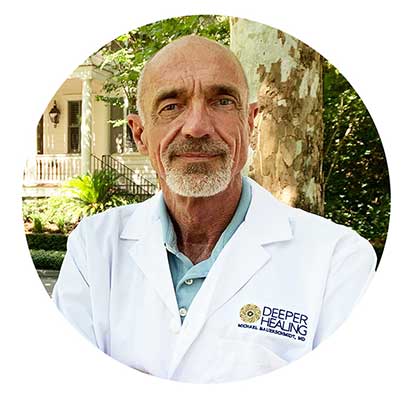
Medically reviewed by Michael Bauerschmidt, MD — Founder and Medical Director, Deeper Healing Medical Wellness Center. Board-certified physician specializing in functional and environmental medicine.
Last reviewed: August 2026.
This page is offered to provide education and isn’t a substitute for professional medical advice, diagnosis, or treatment. Symptoms can have many possible causes, ranging from minor to serious, and what’s true for one person may not be true for another. Always consult a qualified healthcare provider before making any health decisions. This content hasn’t been evaluated by the FDA and isn’t intended to diagnose, treat, cure, or prevent any disease. If you’re experiencing a medical emergency, contact your physician or local emergency services.
If you’d like personalized guidance from Deeper Healing, here is an invitation to learn more. And wherever you are on your journey, we encourage conscious, intentional choices that support your health and the planet’s. Every decision matters.