Systemic Lupus Erythematosus: Can the Root Causes Be Addressed?
Quick answer: Systemic lupus erythematosus (SLE) is a chronic autoimmune disease in which the immune system attacks the body’s own tissues, causing fatigue, joint pain, and rashes. At Deeper Healing in Charleston, SC, we complement your rheumatology care by looking for root triggers — environmental toxins, infections, and gut and immune dysregulation — that may fuel immune activity.
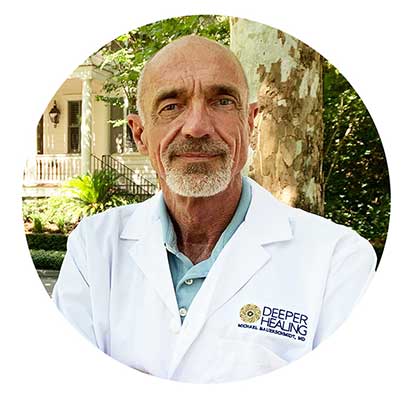
Updated: August 25, 2026 · Reviewed by Michael Bauerschmidt, MD
Key takeaways
- Lupus (SLE) is a chronic autoimmune disease that can affect the joints, skin, kidneys, blood, and other organs.
- According to the CDC, about 90% of adults diagnosed with lupus are women, most often during the childbearing years.
- Lupus tends to run in cycles of flares and remission, and no single test confirms it — diagnosis relies on a pattern of symptoms and labs.
- Research from the National Institute of Environmental Health Sciences links environmental exposures and infections such as Epstein-Barr virus to autoimmune activity in susceptible people.
- Deeper Healing does not replace your rheumatologist; we work alongside standard lupus care to support overall health and reduce the body’s toxic burden.
What is systemic lupus erythematosus?
Systemic lupus erythematosus is a chronic autoimmune disease in which the immune system mistakenly attacks healthy tissue, and its root causes are thought to combine genetic susceptibility with environmental triggers that drive inflammation across the joints, skin, kidneys, heart, lungs, blood, and brain. Because it can involve so many organ systems, lupus looks different from person to person and often follows a pattern of flares and quieter periods. It is far more common in women than men: according to the Centers for Disease Control and Prevention, about 90% of adults diagnosed are women. Lupus is a serious, lifelong condition that requires ongoing care from a rheumatologist.
According to the CDC, lupus is a chronic autoimmune disease that can affect many parts of the body, and about 90% of people diagnosed are women. CDC: Lupus →
What are the symptoms of lupus?
Because lupus can affect many systems at once, symptoms are wide-ranging and can come and go:
- Persistent fatigue
- Joint pain, stiffness, and swelling
- A butterfly-shaped rash across the cheeks and nose
- Skin rashes that worsen with sun exposure
- Fever with no clear cause
- Hair thinning
- Mouth or nose sores
- Fingers and toes that turn pale or blue in the cold (Raynaud’s)
- Chest pain with deep breathing
- Brain fog, headaches, or memory difficulty
Lupus can also affect internal organs such as the kidneys, which is why regular monitoring by your rheumatology team is essential.
What causes lupus — and where a root-cause lens can help
The exact cause of lupus is not fully understood, but it is widely accepted that it develops when a genetically susceptible person meets environmental triggers that push the immune system out of balance. Standard care focuses, appropriately, on calming inflammation and protecting organs with medication — and that care is vital. What it often does not explore is why the immune system became so reactive in the first place. In functional and environmental medicine, we look at contributors such as environmental toxins, chronic infections like Epstein-Barr virus, and gut and immune dysregulation that may push the immune system to make autoantibodies against the body’s own tissues. According to the National Institute of Environmental Health Sciences, environmental exposures are linked to the development of autoimmune disease. Addressing those drivers is not a substitute for lupus treatment, but it may support your overall resilience alongside it. Lupus is one of several conditions we approach this way within our broader autoimmune disease care.
How Deeper Healing supports people with lupus
Deeper Healing works alongside your rheumatologist, never in place of them. We begin with a detailed intake and comprehensive lab analysis to look for the specific toxins — such as mold (mycotoxins), heavy metals, and chemicals — along with the infections and imbalances that may be adding to your immune burden. From there, Dr. Bauerschmidt and our team use environmental medicine, light and oxygen therapies, and targeted detoxification and gut and immune support to help reduce that burden and support overall wellness. We do not stop, change, or advise against any medication your rheumatologist has prescribed — those decisions stay with your specialist, and we coordinate with your standard care.
Low-Dose Allergen (LDA) therapy. For some patients, once the causative factors — toxins such as mold (mycotoxins), heavy metals, and chemicals, together with chronic infections and gut issues — have been identified and addressed, we may introduce Low-Dose Allergen (LDA) therapy: a course of tiny intradermal injections that aims to calm and rebalance an over-active immune system and reduce chronic reactivity over time. Used this way as a complement to — never a replacement for — conventional lupus care, LDA may, over time, help some patients reduce their reliance on medications. Any such change is made only by your rheumatologist; we never advise stopping or altering prescribed medications.
Conventional care vs a root-cause approach
| Conventional lupus care (essential) | Deeper Healing root-cause support (complementary) |
|---|---|
| Diagnoses lupus and monitors organ involvement | Works alongside your rheumatologist, never in place of them |
| Controls inflammation with medication to protect organs | Looks for toxins, infections, and gut and immune drivers adding to immune burden |
| Manages flares as they occur | Aims to support overall resilience and reduce the body’s toxic burden |
| Focuses on the disease process | Focuses on the whole person and the terrain around the immune system |
Key terms explained
- ANA (antinuclear antibodies)
- Antibodies that target the body’s own cell nuclei. A positive ANA is common in lupus, though it can appear in other conditions, so it is interpreted alongside symptoms and other labs.
- Anti-dsDNA antibodies
- Antibodies to double-stranded DNA that are more specific to lupus and can help confirm the diagnosis and, in some people, track disease activity.
- Autoantibodies
- Antibodies the immune system mistakenly makes against the body’s own tissues; several types are used to help diagnose and monitor lupus.
- Complement (C3, C4)
- Immune-system proteins measured in blood; levels can fall when lupus is active, helping doctors gauge disease activity.
- Flare
- A period when lupus symptoms and inflammation intensify, often followed by quieter periods of remission. Identifying triggers can help some patients anticipate flares.
- Lupus nephritis
- Inflammation of the kidneys caused by lupus; because it can be silent early on, rheumatology teams monitor kidney function regularly.
- Photosensitivity
- A tendency for skin rashes or other symptoms to appear or worsen after sun or UV exposure, a common lupus trigger.
- Mycotoxins
- Toxic compounds produced by mold that can act as immune stressors and, in susceptible people, contribute to a heightened immune response.
Patient experience
Many patients arrive exhausted after years of being told their labs are “normal,” or feeling that fatigue and pain were being managed but never fully explored. Read how patients describe their experience with a root-cause approach that works alongside standard care: Deeper Healing patient testimonials →
Frequently asked questions
Does Deeper Healing replace my rheumatologist?
No — we complement your standard lupus care. Lupus is a serious autoimmune disease that requires ongoing management and monitoring by a rheumatologist. Our role is to work alongside that care, looking for environmental and immune drivers that may add to your burden and supporting your overall health. We never advise stopping or changing prescribed medication.
Can lupus be reversed or cured?
There is currently no cure for lupus, and we do not claim to reverse it. Lupus is typically managed over the long term with a rheumatologist, and many people reach periods of remission with good care. A root-cause approach aims to support overall wellness and reduce added immune stressors alongside — not instead of — your standard treatment.
What is the root cause of lupus?
There is rarely a single cause. Lupus is thought to develop when a genetically susceptible person accumulates triggers over time — environmental toxins, chronic infections such as Epstein-Barr virus, hormonal factors, and gut and immune dysregulation. Our work focuses on identifying which of these contributors may apply to you, so they can be supported alongside your medical care.
Is lupus an autoimmune disease, and is it related to toxins?
Yes, lupus is an autoimmune disease, meaning the immune system attacks the body’s own tissues. Research links environmental exposures and certain infections to autoimmune activity in susceptible people. That does not mean toxins alone cause lupus, but reducing this “body burden” is one factor we consider as part of supporting overall immune health.
What tests are used for lupus?
Lupus is diagnosed by your rheumatologist using a pattern of symptoms plus labs such as ANA, anti-dsDNA, complement levels (C3, C4), and blood and urine tests to check organ involvement. In our complementary work, we may also look at markers of toxin exposure — including mold (mycotoxins), heavy metals, and chemicals — as well as infections and gut health to understand the terrain around the immune system.
Do I have to take medication forever?
Medication decisions belong to your rheumatologist, and many people with lupus need ongoing treatment to protect their organs and manage flares. We never advise stopping or reducing prescribed medication. Our aim is to support your overall health so you and your specialist have the fullest picture as you manage the condition together over time.
Can environmental triggers set off a lupus flare?
For many people, flares can be influenced by triggers such as sun exposure, stress, infections, and possibly environmental toxins. Learning your personal triggers can help you and your care team anticipate and reduce flares. Identifying and lowering environmental and immune stressors is a key part of the supportive, root-cause work we offer alongside standard care.
Where can I find a functional medicine doctor for lupus near me?
Deeper Healing Medical Wellness Center is located at 234 Seven Farms Drive, Suite 110, Charleston, SC 29492, on Daniel Island. We see patients from across the country who want root-cause support to work alongside their rheumatology care. We always encourage keeping your specialist as the lead on your lupus treatment.
Your next step: understand what may be adding to the burden
Because environmental toxins and immune stressors can add to the load an already-overactive immune system carries in lupus, a useful first step is understanding your own “body burden.” Our free two-minute assessment helps you gauge whether accumulated toxins could be part of your picture — information you can bring to both your rheumatologist and our team.
Take the Toxin Quiz
Two minutes, free, and completely confidential — see whether your body burden of toxins could be adding to your symptoms.
Sources
- National Institute of Arthritis and Musculoskeletal and Skin Diseases (NIAMS) — Lupus
- Centers for Disease Control and Prevention — Lupus
- National Institute of Environmental Health Sciences — Autoimmune Diseases
Medically reviewed by Michael Bauerschmidt, MD — Founder and Medical Director, Deeper Healing Medical Wellness Center. Board-certified physician specializing in functional and environmental medicine.
Last reviewed: August 2026.
This page is offered to provide education and isn’t a substitute for professional medical advice, diagnosis, or treatment. Symptoms can have many possible causes, ranging from minor to serious, and what’s true for one person may not be true for another. Always consult a qualified healthcare provider before making any health decisions. This content hasn’t been evaluated by the FDA and isn’t intended to diagnose, treat, cure, or prevent any disease. If you’re experiencing a medical emergency, contact your physician or local emergency services.
If you’d like personalized guidance from Deeper Healing, here is an invitation to learn more. And wherever you are on your journey, we encourage conscious, intentional choices that support your health and the planet’s. Every decision matters.