MRSA (Methicillin-Resistant Staphylococcus aureus): What Is It, and How Is It Treated?
Quick answer: MRSA (methicillin-resistant Staphylococcus aureus) is a staph bacterium resistant to many common antibiotics, causing skin, wound, and sometimes serious deeper infections. Active MRSA requires evaluation and treatment by a physician or infectious-disease provider. At Deeper Healing in Charleston, SC, we do not treat MRSA — we support overall immune resilience and reduce toxic burden alongside your standard medical care.
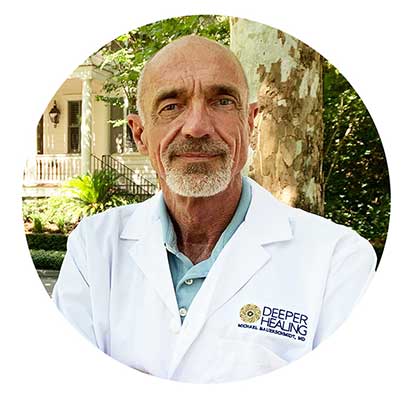
Updated: August 25, 2026 · Reviewed by Michael Bauerschmidt, MD
Key takeaways
- MRSA is a type of Staphylococcus aureus bacteria that resists many first-line antibiotics, which is why it needs professional medical diagnosis and treatment.
- MRSA is common: according to the CDC, about one in three people — roughly 33% — carry Staphylococcus aureus harmlessly, while about two in every 100 (2%) carry MRSA.
- Active MRSA infections can spread and become serious — always have symptoms evaluated promptly by a physician or infectious-disease provider.
- Standard care from your medical team — cultures, appropriate antibiotics, and wound drainage — is the treatment for an active MRSA infection.
- Deeper Healing does not diagnose, treat, cure, or clear MRSA; we support your general health alongside that care — overall immune resilience and reducing the body’s toxic burden as a complement to, never a replacement for, your medical treatment.
What is MRSA?
MRSA is a strain of Staphylococcus aureus — a common bacterium that many people carry harmlessly on their skin or in their nose — that has become resistant to methicillin and several other widely used antibiotics, a problem known as antibiotic resistance. When it causes infection, MRSA most often appears as a red, swollen, painful skin or wound infection, but it can also cause more serious infections of the bloodstream, lungs, or bones. Because it resists common antibiotics, MRSA requires diagnosis and treatment by a qualified medical provider, according to the Centers for Disease Control and Prevention. Carrying the bacteria is far more common than infection: data from the CDC indicate that approximately 5% of patients in U.S. hospitals carry MRSA in their nose or on their skin, and the NIH’s MedlinePlus notes most carriers never develop illness.
“Approximately 5% of patients in U.S. hospitals carry MRSA in their nose or on their skin.” — Centers for Disease Control and Prevention
What are the symptoms of MRSA?
MRSA symptoms depend on where the infection is. Skin infections are the most common presentation. Seek medical care promptly if you notice:
- A red, swollen, warm, or painful bump or area on the skin
- A sore or boil that drains pus or fluid
- A wound that will not heal, or worsens after several days
- Skin that looks like a spider bite but grows or spreads
- Fever or chills alongside a skin lesion
- Warmth, redness, or red streaking spreading from a wound
Any suspected MRSA infection should be evaluated by a physician or infectious-disease provider without delay — active infections can spread to others and become serious if untreated.
What causes MRSA, and why immune resilience matters
MRSA infection begins with the bacterium itself, which spreads through skin-to-skin contact, shared items, and contaminated surfaces. Treating that infection is the job of your medical team. Carrying MRSA on the body without symptoms — a state called colonization — is different from an active infection. At the same time, many people ask why some individuals experience repeated or hard-to-shake infections while others do not. Overall resilience — immune function, nutrient status, and the body’s cumulative burden of environmental stressors such as heavy metals, mold, and chemicals — is one part of that broader picture. Research from the National Institute of Allergy and Infectious Diseases studies how host factors and bacterial resistance interact, and the CDC’s work on antibiotic resistance highlights why resistant infections are harder to treat. Deeper Healing focuses only on supporting that general resilience and reducing toxic burden — not on treating the infection, which remains with your physician.
How Deeper Healing supports patients with a history of MRSA
To be clear: Deeper Healing does not diagnose, treat, or clear MRSA infections — that care belongs with your physician or infectious-disease provider. What we offer, for patients who want it alongside their medical treatment, is support for overall wellness. Building on detailed intake and comprehensive lab analysis, Dr. Bauerschmidt and our team look at the broader picture of immune resilience, nutrient status, and environmental burden, drawing on environmental medicine and light and oxygen therapies. The aim is to support your general health as a complement to — not a substitute for — the medical care that treats the infection itself.
Conventional care vs a root-cause support approach
| Conventional MRSA care (your medical team) | Deeper Healing wellness support (alongside) |
|---|---|
| Diagnoses and treats the active infection (cultures, antibiotics, wound drainage) | Does not diagnose or treat MRSA; supports overall health alongside that treatment |
| Focused on eradicating the bacteria and preventing spread | Focused on general immune resilience and reducing the body’s toxic burden |
| Managed by a physician or infectious-disease specialist | Coordinates with — and never replaces — your medical team |
| Essential and time-sensitive for any active infection | Optional, general wellness support you may choose in addition |
Key terms explained
- MRSA
- Methicillin-resistant Staphylococcus aureus — a strain of staph bacteria that resists methicillin and several other common antibiotics, so infections must be diagnosed and treated by a medical provider.
- Staphylococcus aureus
- A common bacterium that many healthy people carry on the skin or in the nose. It can cause infection when it enters the body through a cut or wound.
- Antibiotic resistance
- The ability of bacteria to survive drugs designed to kill them. MRSA resists methicillin and several related antibiotics, which is why treatment must be guided by a medical provider.
- Colonization vs infection
- Carrying MRSA on the skin or in the nose without symptoms (colonization) is different from an active infection, which causes symptoms and requires medical treatment.
- Abscess
- A pocket of pus that can form with a MRSA skin infection. Abscesses are often treated by a medical provider through drainage in addition to antibiotics.
- Bacterial culture
- A laboratory test in which a sample from a wound, sore, or the blood is grown to identify the bacteria and confirm whether MRSA is present. It is ordered and interpreted by a physician.
- Immune resilience
- The body’s overall capacity to defend itself and recover, shaped by factors such as sleep, nutrition, and environmental burden. Supporting general resilience is wellness support, not treatment of an infection.
- Toxic burden
- The cumulative load of environmental stressors — such as heavy metals, mold, and chemicals — that the body carries. Reducing this burden is part of supporting general wellness, not treating infection.
Patient experience
Many people who come to us for general wellness support are managing complex health histories alongside their medical care. Read how patients pursue root-cause support as a complement to conventional treatment: Deeper Healing patient stories →
Frequently asked questions
Can MRSA be cured or cleared?
Many MRSA infections can be successfully treated, but that treatment must come from a physician or infectious-disease provider — typically through cultures, appropriate antibiotics, and drainage of any abscess. Deeper Healing does not treat, cure, or clear MRSA. If you have or suspect an active MRSA infection, seek medical care promptly, because untreated infections can spread and become serious.
Why do some people get recurrent MRSA infections?
Recurrence has many contributors, including ongoing exposure, skin barrier breaks, and colonization that your medical team can address. Overall resilience — immune function, nutrient status, and cumulative environmental burden — is one part of the broader picture. Deeper Healing focuses on supporting that general resilience alongside your care; decisions about the infection itself always belong to your physician.
What tests diagnose MRSA?
MRSA is diagnosed by your medical provider, usually with a bacterial culture of a wound, sore, or other sample, sometimes with blood or imaging tests when a deeper infection is suspected. These are medical tests ordered and interpreted by a physician. Deeper Healing does not diagnose MRSA; any suspected infection should be evaluated by your medical team.
Is MRSA contagious, and how does it spread?
Yes. MRSA spreads through direct skin-to-skin contact, contact with drainage from an infected wound, and shared items such as towels, razors, or sports equipment. Good hand hygiene, keeping wounds covered, and not sharing personal items help reduce spread. Because it is contagious and can be serious, an active MRSA infection should be evaluated and treated by a medical provider.
Does Deeper Healing replace my physician or infectious-disease provider?
No. Deeper Healing does not replace your physician or infectious-disease provider, and we do not diagnose or treat MRSA. An active MRSA infection needs medical treatment from your medical team. We complement that care by supporting your general wellness — immune resilience and reduced toxic burden — alongside, and always in coordination with, your standard medical treatment.
Can supporting my immune system help if I keep getting infections?
Supporting overall health — sleep, nutrition, and reducing environmental burden — is generally good for wellbeing, and some patients choose that support alongside their medical care. However, this is general wellness support, not a treatment for MRSA and not a substitute for medical care. Any active or recurrent infection should be managed by your physician, who directs treatment decisions.
Is MRSA dangerous?
It can be. Many MRSA infections stay limited to the skin, but MRSA can also cause serious infections of the bloodstream, lungs, or bones, especially if untreated. That is why prompt medical evaluation matters. If you have a spreading wound, fever, or a sore that will not heal, contact a physician or seek urgent care right away rather than waiting.
Where is Deeper Healing located for wellness support in Charleston, SC?
Deeper Healing Medical Wellness Center is located at 234 Seven Farms Drive, Suite 110, Charleston, SC 29492, on Daniel Island. We provide root-cause wellness support alongside your medical care. For an active MRSA infection, please see your physician or infectious-disease provider first; we are happy to support your general health in coordination with that treatment.
Your next step: understand your body’s toxic burden
Because environmental toxins can weigh on overall immune resilience, one useful step in supporting your general health — alongside any medical care — is understanding your own “body burden.” Our free two-minute assessment helps you gauge whether accumulated toxins could be adding to your overall load. It is a wellness tool, not a diagnosis or treatment for infection.
Take the Toxin Quiz
Two minutes, free, and completely confidential — see whether your body burden of toxins could be weighing on your overall health.
Sources
- Centers for Disease Control and Prevention — MRSA (Methicillin-resistant Staphylococcus aureus)
- Centers for Disease Control and Prevention — About MRSA
- Centers for Disease Control and Prevention — MRSA in the community
- Centers for Disease Control and Prevention — About antibiotic resistance
- National Institute of Allergy and Infectious Diseases (NIH) — MRSA
- MedlinePlus (NIH National Library of Medicine) — MRSA
Medically reviewed by Michael Bauerschmidt, MD — Founder and Medical Director, Deeper Healing Medical Wellness Center. Board-certified physician specializing in functional and environmental medicine.
Last reviewed: August 2026.
Deeper Healing Medical Wellness Center · 234 Seven Farms Drive, Suite 110, Charleston, SC 29492 · 843-253-7302
This page is offered to provide education and isn’t a substitute for professional medical advice, diagnosis, or treatment. Symptoms can have many possible causes, ranging from minor to serious, and what’s true for one person may not be true for another. Always consult a qualified healthcare provider before making any health decisions. This content hasn’t been evaluated by the FDA and isn’t intended to diagnose, treat, cure, or prevent any disease. If you’re experiencing a medical emergency, contact your physician or local emergency services.
If you’d like personalized guidance from Deeper Healing, here is an invitation to learn more. And wherever you are on your journey, we encourage conscious, intentional choices that support your health and the planet’s. Every decision matters.
MRSA is a bacterial infection that requires evaluation and treatment by a qualified physician or infectious-disease provider.